
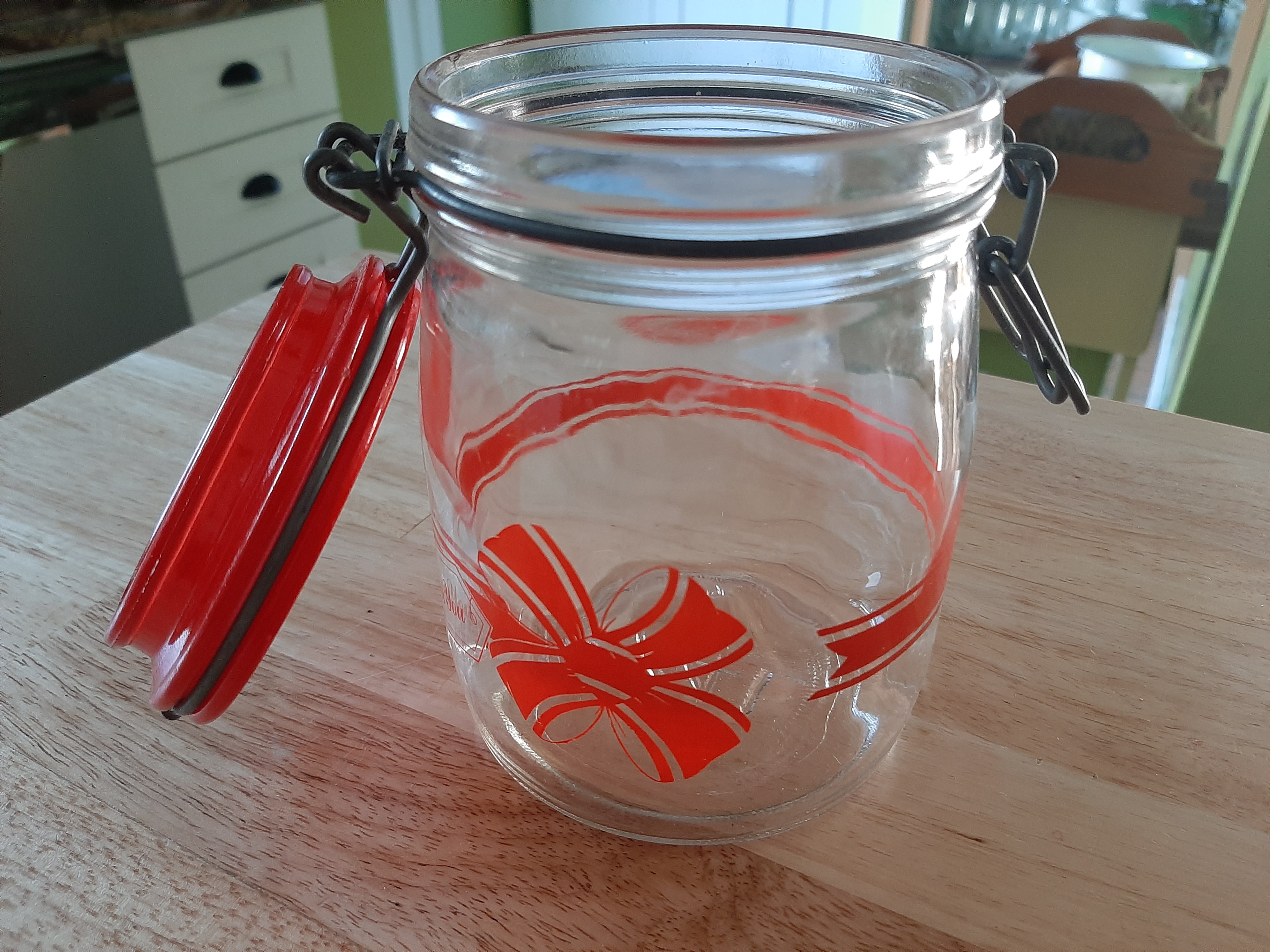
It started with little glass jar with one of those old-timey snap-on lids. I have great sentimental attachment to this particular jar, as it belonged to beloved Mama Sue Economou, who passed away in September at age 98. This was Sue’s sugar jar, mainly used when company was over and someone wanted sugar in their coffee.
This jar came into play last month, when, inexplicably, soon after all we Californians were ordered to stay home to flatten the COVID-19 curve, I had the sudden urge to grow my own yeast. I say inexplicably, because I’d never had the faintest desire to grow my own sourdough starter before, since I just used store-bought yeast. (My favorite yeast is from Moore’s Flour Mill in Redding.)
But suddenly, faced with the prospect of being cooped up inside my home for days, weeks or even months, making sourdough starter seemed the logical thing to do. I felt like a pioneer woman who would have the skills to not just bake bread, but grow my own yeast. I imagined at the peak of the pandemic, people lined up anxiously outside my home, waiting for a loaf of hot sourdough masterpieces, baked in my wood-burning bread oven. I’d gladly give away the bread, proud to use my baking skills to help keep people alive. Of course, I’d have my chickens’ eggs, and fresh produce from my garden, and honey from my hives to share, too. Not that I have chickens, or a wood-burning bread oven, or a garden, or hives at the moment, but they’re in my master pandemic plan.
Thank you, Doni!
Why, you’re welcome, my fellow pandemic peasants.
I’ve been baking bread my entire adult life, but sourdough starter was out of my wheelhouse. For one thing, it’s a living thing. It grows. It can die. It requires care and feeding, and yes, I said feeding. You have to constantly tend to it and replenish it with flour and water, and then make sure to use it, or it will die. If you don’t use it you should dump out half of it, or give it away, because eventually, that little jar will be overrun with sourdough starter, and eventually, it will – you know – die.
Sourdough-starter death aside, did you know that with the proper care and feeding, a starter can live for more than 100 years, passed down from person to person? There are fantastical stories of sourdough starters being kept alive and passed down from generation to generation.
I know that sourdough starter sounds intimidating. Heck, I was intimidated, and I’m an experienced baker.
However, my a pat response to those who say they “can’t cook” is this: If you can read, you can cook. It’s just that simple.
So I set out reading about sourdough, and entered a world of complex cookery that set my head spinning. The good news is that there are basically just two ingredients to making sourdough starter: flour and water. Put it in a jar, like Sue’s, above, and leave it on the counter. Stir it. Repeat the next day, adding a little flour and water, then stir it. This goes on for days, until about the fifth or 14th day, it’s ready to bake with, and from then on, the starter lives in the refrigerator where you continue to use it and feed it periodically.
The bad news is that making sourdough starter, and keeping it healthy, is difficult, at least it was for me. For one thing, it takes FOREVER, and when I say forever, I mean that some recipes, from making sourdough starter to baking sourdough bread, requires about 29 steps. I’m not joking. And it takes days, because for most recipes you need to start the “leaven” the day before with some of the sourdough starter, but you need to let it rest for about 12 hours. The next day you can start the bread-making process, but that requires multiple rises, so basically you’ll have hot sourdough bread at about midnight of Day 2. But hey, we’re in a pandemic, which is a time when we grant ourselves permission to eat as if there is no tomorrow. Pass the butter, please.
Of course, in order to successfully bake sourdough bread, one must assume you were successful in growing your sourdough starter in the first place. I failed, multiple times, which just blew my mind, because I followed directions. I’m a good recipe reader and recipe follower! I am, I am, I am!
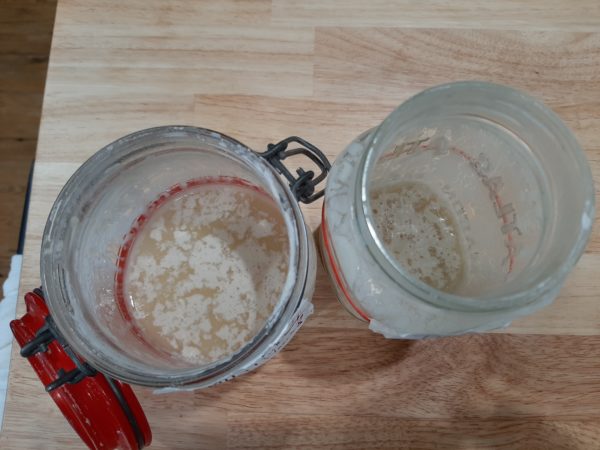
You can tell if sourdough starter has failed by the way it looks and smells. If it smells like beer, or yeast, that’s good. If it smells like sweaty feet, that’s bad.

What I loved about making sourdough starter is it gave me something to look forward to each day, a way to break up the monotony and take my mind off the pandemic. Each morning I’d run to my starter, lift the lid and inhale. Sweet yeast, or smelly feet? Sometimes, it’s hard to tell. Yeast? Feet? Yeast? Feet?
Finally I succeeded in making my first loaf of sourdough bread.

It wasn’t particularly pretty, but it tasted great, and had a lovely chewy texture.
Since then, I’ve made more sourdough bread, and each time, the loaves turned out better.
 I tried one sourdough starter recipe using pineapple juice for its first feeding, and after that used just water. But after that, I stuck to starters made with flour and distilled water.
Meanwhile, though, my newest jar of sourdough starter is giving me trouble again. It smells too sour. So I’m throwing it away and starting over. Luckily, there’s such a small amount of flour involved that it’s not the end of the world to remake another starter.
I don’t have the heart to publish the entire sourdough starter recipe here, because I don’t want to scare you off.
Here’s the easy part:
Sourdough Starter Recipe
Flour
Water
Click here for the sourdough starter recipe and detailed instructions.
Click here for a sourdough bread recipe.
If all that’s too confusing, or too much work, I understand. Next time, here in Doni’s Pandemic Pantry, I’ll share how to make THE most simple yeast bread, using a dump-it technique; meaning you dump all the ingredients in one bin or bowl and then store the dough in the refrigerator until you need bread dough.

After that, we can move onto other flour-based pandemic comfort foods, like popovers.
That’s assuming we still have flour. And yeast. Time? We’ve got plenty of that. All that’s left is patience.


