


A mother holds her newborn baby as midwife Nora Mcneill checks the infant’s vitals. Photo by Brandon Ballard.
It was still dark outside, barely two days into February, when my phone pinged a text message notification that roused me from a deep sleep in the wee hours of the morning:
“Good morning! It’s Nora the midwife. We’re having a baby here in the near future. Hope you see this message in time. Getting close. Hurry. My front door is unlocked. She’s starting to want to push.”
I leapt from my bed, and dressed warmly, with extra layers for the winter drive not far from my home. I grabbed my notebook and a bottle of water. I knew labors could last a while. I was prepared for as long as this process would take. I’d already agreed to not take photos, which would leave me free to observe and take notes. I imagined myself tucked discreetly away in a chair in a corner of the room; far enough away to provide respectful privacy, yet close enough to watch the delivery. I felt both nervous and excited.
As a reporter, I’ve visited some memorable places on my quest for a story. I’m nosy by nature, but I confess that sometimes I choose stories to satisfy a personal curiosity. For example, I — despite my fear of heights –once stood on the tippity top of a rock quarry to see truckdrivers’ landmark Christmas tree. Another time newspaper photographer Brad Garrison and I went inside a mosh pit, surrounded by leaping teenagers, because my own son had been there, and had come home covered in welts. I’ve been in the back room of a mortuary. I’ve scaled a barbed wire fence via an above-ground pool ladder off the shoulder of Interstate 5 to inspect the annual Freeway Tree, where photographer John Stubler and I were chastised via a blaring bullhorn from a low-flying CHP helicopter with orders to return to our vehicle upon the threat of arrest. I’ve been in multiple restaurants’ kitchens (where I sometimes learned more than I ever wanted to know). Photographer Andreas Fuhrmann joined me inside a mechanic’s shop to meet his adopted duck — Half Black — who’d befriended the mechanic’s (illegal) 17-foot python (public health department wasn’t amused and the shop closed). I’ve been on Mt. Shasta’s slopes for the opening day of ski- and snowboard-season (see fear of heights, above). I’ve covered various political protests and rallies where I’ve been openly cursed. I’ve stood upon the cold ashes of several homes destroyed by fire. And through all these decades, I’ve been inside too many homes, businesses and coffee shops than I can remember for interviews about every aspect of life, death, joy, heartache, and everything in between.
Even so, during my more than 32 years as a journalist, perhaps no story filled me with a greater combination of anticipation and anxiety as the recent opportunity to witness a human birth. I was deeply honored to be granted permission by a pair of willing young parents, and 74-year-old Mcneill, the midwife prepared to deliver the couple’s third child. The birth was set to take place at Mcneill’s home, renovated to feature a fully-equipped birthing center. At first glance the facility looks like an upscale hotel suite, but the space features not just the birthing room, but a beautifully decorated post-partum bedroom, complete with a bassinette, in case the mother wants to spend the night there after delivery, rather than go straight home. Cabinets are fully stocked with every kind of medical and sanitary supply necessary to safely deliver babies, and be ready in the event of any issues or complications.
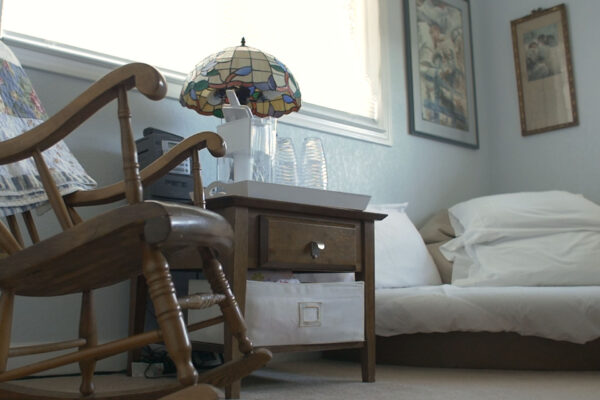
A birthing suite inside midwife Nora Mcneill’s home awaits deliveries. Photo by Brandon Ballard.
Nearby is a bathroom with an enviable deep soaking tub, and a place to wash newborns.

Aside from the requisite journalistic interest in the topic of Mcneill the midwife — all part of the information-gathering process for the story about the upcoming Saturday event to honor Mcneill — I had a selfish reason for wanting to observe a birth.
When stories get personal

Doni and her first baby, 1979.
Although I’ve had three pregnancies, to my profound disappointment, all my babies were delivered by C-section; absolutely not part of my grand maternal master plan. As a 22-year-old first-time mother, I was so convinced that I would have a textbook perfect delivery that I skipped the Lamaze class session “complications and C-sections”. Why? Because I knew my delivery wouldn’t have have a single complication. I was excited to become a mother. I had read everything I could find about childbirth, motherhood and breastfeeding. Hell, I even joined Stockton’s Le Leche League chapter, and still have its cookbook, which contains a great molasses ginger cookie recipe.
Never could I have imagined the devastating contrast between the great expectations of my dream delivery and the reality of an unforgettable nightmare birthing experience that I’d never fully accept.
My delivery took place at a then-backwater San Joaquin General County Hospital where I was shown to a bed and tethered to a fetal monitor for more than 18 hours, something that already followed six hours of labor at home, and a failed induction at the hospital the previous day. My baby’s due date of Nov. 28 had come and gone. Even the hardest, most relentless labor was maddingly unproductive. Eventually, after a few hospital-shift changes and hours of “failure to progress” beyond 3 centimeters (10 centimeters being the target measurement) on Jan. 4, 1979, a doctor literally wearing a paisley ascot around his neck breezed by, checked my cervix with a gloved hand without looking at my face and ordered an emergency C-section. By then, my entire body was shaking so violently that when it came time for me to sign the surgery consent form — during the first and only time my husband had left my side to fetch a cup of coffee — all I could manage was an ‘X’ in place of my signature. When my husband returned a few minutes later, I was gone, and had already been wheeled into the operating room. My husband was not allowed inside.
For what it’s worth, about six months later my baby and I were invited back to the hospital to receive an award from the hospital’s board of trustees for writing a detailed (scathing) letter of complaint about the hospital’s ignorant, inhumane, third-world conditions that included placing grieving mothers who’d lost their babies in the same large maternity dorm with mothers of living babies. There were wide swaths of smeared, coagulated blood on the communal bathroom floors. Babies were kept in the nursery, and like clockwork were all brought out en masse in a wagon-train of rolling bassinets full of howling babies for feedings every four hours, then promptly returned to the nursery.
It was only after 12 hours following my daughter’s birth by emergency C-section that a nurse finally brought my baby for me to hold for the first time. The nurse explained that the reason I couldn’t see her sooner was my baby was too stressed from the long, tiring birth, and needed to be “warmed up”. I will go to my grave haunted by the fact that so many hours passed before I could hold and bond with my first child. I’m still angry at myself for not being a better advocate for myself and my baby during my first of many failed motherhood tests to come, all the way into eventual adulthood. The hospital board promised to make changes based upon my letter. Who knows if that’s true. It’s noteworthy that I was one of the only Caucasian patients — a young mother on Medi-Cal married to a poverty-stricken pharmacy student — on that maternity ward. The rest were Spanish-speaking migrant farm workers, which says everything there is to know about how the hospital viewed those patients.
Two years later, when I was due to deliver my second child — this time thank God in the awesome Lodi Memorial Hospital– and three years after that, my third child — at Mercy Medical Center — the only options at the time were scheduled, repeat C-sections. At least the kids’ dad was allowed to be there for those births, which was something wonderful. Yes, I eventually ended up with three healthy children. But I always felt as if I’d let myself and my babies down by having C-sections, especially the first one. To this day, my daughter’s birth is still difficult to recall without fighting feelings of indescribable shame and sorrow.
And that’s why I jumped at the chance to not just write about Mcneill, but to watch her deliver a baby.
Special delivery at a special birthing suite
By the time I arrived at Mcneill’s home and quietly let myself inside and downstairs, the dimly lighted birthing suite was a hub of hushed sounds and activity. Faint strains of relaxing spa music played softly in the background. The room’s focal point was the birthing mother, on her hands and knees on a low, thick mattress that dominated one corner of the room. She was surrounded by pillows that helped prop her up, while her husband sat beside her, rubbing his wife’s back and murmuring words of encouragement. The mother wore a stretchy tank top. Her long thick hair was pulled up in a casual messy bun, which somehow looked elegant. Eyes closed, lips pursed, the mother periodically emitted low hums and occasional moans as she provided ongoing verbal updates about her body’s progress, and exactly how she felt.
“It burns,” she said with a grimace, to which Mcneill empathized, and said she knew, but the good news was it would soon be time to push. “You’re almost there,” Mcneill said with a smile.
At one point the mother’s eyes grew wide with alarm. She asked Mcneill to check if her sensation was correct, that she may in fact be inadvertently pooping. Mcneill laughed, waved her hand in a think-nothing-of-it gesture, and assured the mom to not to worry a bit about it, because everything was all just fine. Meanwhile, as Mcneill spoke she got more wipes to clean up the mother and reposition fresh jumbo disposable blue pads over the clean bedding.
Mcneill was in constant motion. She checked frequently on the laboring mother, while still giving the couple space to experience the birthing process. As Mcneill watched the mother, she sometimes offered suggestions about position changes to help make the mother more comfortable, and prepare to push. Mcneill also spoke in soft, low tones to her midwife assistant, Anna Hendricks, all the while reassuring the father, and also updating the birthing mother’s mom, there to offer support for her daughter. The grandmother beamed when she said she’d been lucky enough to be present at every grandchild’s birth.
“OK, give me a push,” Mcneill said gently to the mother.
Things happened quickly. The mother followed Mcneill’s calm instructions of when to push, and when to hold on for a sec, and when to push again. Minutes passed with lots of communication between the mother and Mcneill.
At 5:11 a.m. on Feb. 2, a robust baby girl was born inside Mcneill’s birthing suite. The baby wailed a lusty cry that resulted in a collective sigh of relief throughout the room. The mother cried and cooed to her tiny daughter, “Hello baby,” she said to her crying newborn. “Welcome to the world. It’s OK. You’re with mommy now.”
The next phase was the successful delivery of the placenta, which assistant Hendricks whisked away in a small plastic basin for meticulous inspection. The mother asked Mcneill if she could please take a shower.
“Not yet,” Mcneill said. “Soon. This golden hour is critical. First you need to bond and nurse your baby. When you nurse it releases a hormone to contract the uterus. We want that uterus nice and tight.”
Mcneill helped prop the mother up with plenty more pillows behind her back so she could initiate nursing. The baby latched on immediately, as if she’d been nursing for months, not mere moments.
The grandmother smiled at her daughter. “Good job! You did good!”
Meanwhile, tears were rolling down this reporter’s face, as I stood as inconspicuously far away as possible, but still close enough to see the baby’s head crown and slip effortlessly into Mcneill’s waiting, expert hands. My back was up against a closet door. My knees were locked. My fingers were clutched around my pen, notebook and unopened water bottle. I dared to finally exhale, and suddenly regretted the extra layers of clothing. My main concern was to remain upright and not make a scene during this precious family’s special moment as I fought the sensation of nausea, a cold sweat and spinning lightheadedness in a room especially heated with the barely dressed mom and naked newborn baby in mind, combined with a sensory overload of so many foreign — to me — sights and sounds.
In retrospect, I’m pretty sure I was doing fairly well until the words “pooping” and “placenta” were uttered.
“I will not pass out. I will not pass out. I will not pass out.”
I did not pass out. As the elated family enjoyed their blessed private moments with their adorable new baby, I gingerly made my way to the hallway to get some fresh air. There, I was greeted by Hendricks, the midwife assistant, who enthusiastically volunteered a thorough placenta show-and-tell, after which she proudly proclaimed the placenta as perfect.
I did not pass out.
The road to midwifery

Midwife Nora Mcneill holds just two of the more than 1,200 babies she’s delivered in her five decades of midwifery. Photo by Brandon Ballard.
What was a cathartic, exhilarating, once-in-a-lifetime experience for me on that chilly February morning was yet another spectacular day at work for Mcneill, someone who’s delivered more than 1,200 babies during her 50 years of her midwifery. In fact, Mcneill has delivered three additional babies since the Feb. 2 birth that I was fortunate enough to observe.

Midwife Nora Mcneill carefully inspects a newly delivered infant as its mother looks on. Photo by Brandon Ballard.
Even so, each birth is a joyful miracle for her, not just because of the babies, but because of the parents who choose Mcneill to guide them through the parenthood process, from maternity and prenatal care and education, all the way through the day of delivery, and postpartum care.
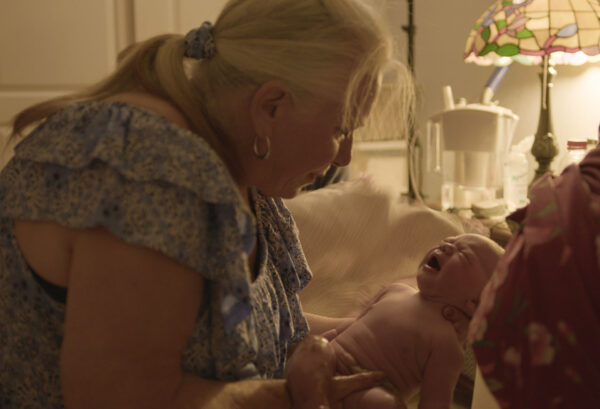
Midwife Nora Mcneill holds a recently delivered newborn in her residential birthing suite. Photo by Brandon Ballard.
In Mcneill’s early years as a midwife, she regularly struck out in the dead of night with her car loaded with medical and birthing supplies to travel over hill and dale to reach laboring mothers, no matter where, no matter when, no matter the weather, terrain, or condition of the mother’s home. As the years passed, she realized that it made more sense for the birthing moms to come to her, where she had everything on the premises that she might possibly need to be prepared for every eventuality. She first started delivering babies in her current home on the July 4th weekend of 1998. Prior to that, she’d delivered babies in her former home in South Redding.

Midwife Nora Mcneill does a prenatal exam on a expectant mother as the baby’s father looks on. Photo by Brandon Ballard.
Her current home is ideal, located a short distance from Mercy Medical Center, which is helpful in the rare event there’s a birthing emergency that requires hospitalization.
“I’ve only once in 50 years had to actually clamp and cut an umbilical cord in order to be able to deliver the baby,” Mcneill said. “And if you’re talking about the risk of hemorrhaging, with midwives, part of our licensure allows us to start IVs and give medications that can help control bleeding. That’s my first line of defense. But if it’s a more persistent hemorrhage, then I will use injectable pharmaceuticals. Those measures work on hemorrhaging that’s caused from the uterus not clamping down tightly. But other forms of hemorrhage, like maybe from a severe tear in the cervix, or a tear in the vaginal wall, those are not going to respond to pharmaceuticals, and may require surgery.”
But those emergencies are the exception. According to Mcneill, in the hundreds upon hundreds of of births she’s overseen, there have been just a few times when an ambulance was called, and in those instances the incidents involved something unforeseen and unexpected, such as a torn umbilical cord, or as mentioned above, a torn cervix or torn vaginal wall. She said that many potentially stressful situations, such as cords around babies’ necks, or oxygen deprivation, are scenarios she is trained to successfully handle as a registered nurse. Her home birthing center has oxygen on the premises, and as a nurse she’s licensed to administer IVs to control bleeding.
Mcneill, with a wide, bright youthful smile and eyes that seem to literally twinkle as she speaks, says she’s blessed to be entrusted to help parents experience the miracle of childbirth. But Mcneill has suffered hardships, too. Her husband Mike died suddenly in 2001, and six years ago her daughter died of complications from a fatal asthma attack. About eight years ago she remarried. Her second husband’s name is Mike, too. The couple remodeled their west Redding home with a focus on transforming the lower level of their residence into a full-service birthing center.
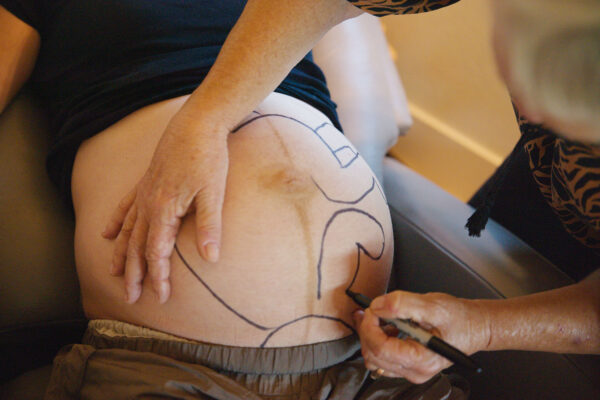
During a prenatal appointment, midwife Nora Mcneill literally illustrates for the parents on the mother’s still-pregnant abdomen the baby’s current position. Photo by Brandon Ballard.
For the last 20 years, almost all Mcneill’s deliveries have happened exclusively in her home.

Midwife Nora Mcneill shares a peaceful moment with parents and their newborn, delivered by Mcneill in her residential birthing suite. Photo by Brandon Ballard.
It’s a painful subject for her to acknowledge, but she has encountered periodical pushback from some traditional obstetric personnel over the years. And there was a difficult season when she was targeted by the nursing board, instigated by people who sought to force Mcneill to cease her midwife practice. Even so, in all those situations, Mcneill prevailed and was deemed competent and capable and approved by the state of California to continue her midwifery practice. Mcneill acknowledges that there’s nothing she can do to appease those who characterize all home deliveries as dangerous, or those who believe that all babies should be born in hospitals.
“The problem with some people in the medical community is that they don’t get to see the many, many uncomplicated, great births,” she said. “Instead, all they end up seeing of my patients are rare ones with complications that required being transferred to the hospital.”
Mcneill accepts the fact that a segment of the medical community will never accept her or her work, but she knows she’s not alone.
“Sometimes it’s the classic stuff that midwives have always had to deal with,” she said. “We’re often treated like second-class citizens. That’s why in the healthcare community right now it’s a benefit to me that I’m an RN, which, when some doctors hear, are like, ‘Oh, OK’. In reality, my nursing part of me is very different from the midwifery part of me.”
Over the years, Mcneill has worked with many midwifery students who assist with births, most of whom come from a 4-year bachelor program in Idaho called Mercy in Action. To her knowledge, California lacks any credentialed midwifery programs.
When asked how and why Mcneill pursued midwifery in the first place, she explained that she didn’t exactly choose a midwifery career path. Rather, she said the calling evolved after working as a childbirth educator. She noticed a pattern of recurring horror stories from mothers who described traumatic births, many of which Mcneill came to believe were unnecessarily negative experiences due to a prioritization of medical over maternal.
Mcneill believes childbirth should be a natural process, free of as much outside medical interference as possible, unless there is a true medical emergency. A cat-lover, she laughed when she said that in some ways, watching several feline births over her lifetime never ceases to remind her that generally speaking, mothers’ bodies — whether a woman or a cat — know instinctively what to do.

A husband rubs his wife’s back during her labor in midwife Nora Mcneill’s birthing suite. Photo by Brandon Ballard.
For Mcneill, her mission as a midwife is to do everything in her power to make the birthing process as safe, informed, peaceful, and as natural as possible for the mothers, babies, and their families.
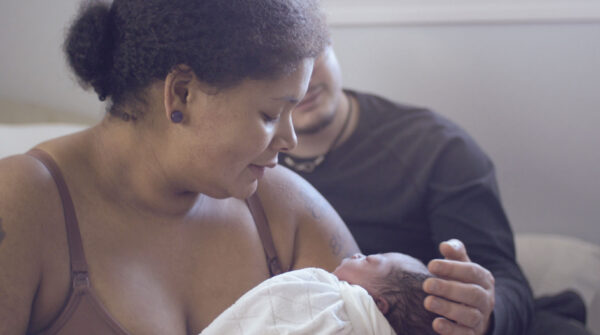
A couple welcomes their newborn following a delivery assisted by midwife Nora Mcneill inside her residential birthing suite. Photo by Brandon Ballard.
For that reason, it’s perhaps no surprise that Mcneill isn’t a fan of seemingly inexplicable birthing trends, such as water births — where the mother sits in a kiddie swimming pool full of water as the baby is delivered under water. Mcneill pointed out that because human mothers aren’t marine mammals — like dolphins and whales — they have no business giving birth under water. She shrugged.
“That’s just what I believe,” she said.
When I confessed why I’d wanted to see a human birth, and described the birth of my first baby, Mcneill shook her head.
“That’s so sad,” she said. “It sounds as if it really didn’t need to be that way.”
That’s what I’ve always thought, too.
Of course, there’s no going back. But going forward, Mcneill said she will continue as long as she’s able to offer the maternity services she does precisely so mothers can experience a birthing process that will bring tears of joy upon reflection, not a lifetime of regret, whether it’s a veteran mother of multiple children, or a first-time 22-year-old mom who’s convinced she will have a dream delivery.
Father and filmmaker
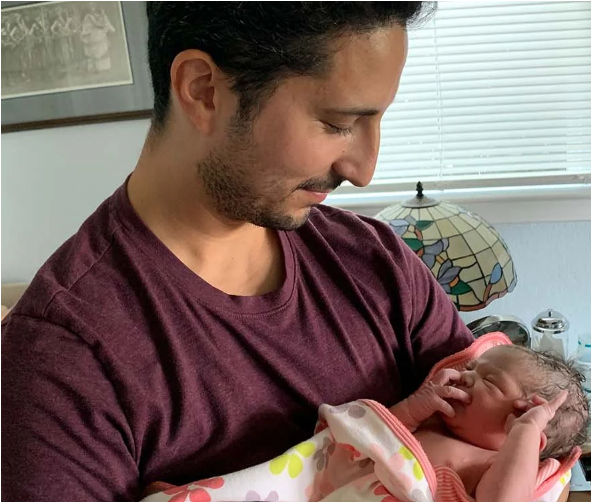
Brandon Ballard holds his newborn baby following its birth at Nora Mcneill’s birthing suite. Photo courtesy of Brandon Ballard.
Brandon Ballard and his wife are examples of a couple who chose Mcneill’s birthing services over a hospital birth. Mcneil assisted in the the delivery of both Ballard babies, now ages 5 and 7.
A documentary filmmaker by trade, it was a natural progression for Ballard to chronicle Mcneill, not just during the births of his two children, but he soon began documenting Mcneill’s entire life and career. His film, Delivering in Faith, The Story of a Midwife, will be shown at the Saturday event in Mcneill’s honor.
Ballard’s website describes “Delivering in Faith” as “…directed by him, a filmmaker with a passion for storytelling and a track record of creating inspiring and impactful documentaries. Brandon moved to Redding to start a family after working in the Hollywood film and television industry for more than a decade.
“Having Nora deliver our babies — and working with her — was such an amazing experience, Ballard said. “And as we were going through it I was like, ‘Oh, we should be getting out more awareness about this whole thing.’ At first the scope was small; just showing midwife care versus what’s out there in the form of delivery options. But then the project turned bigger, and the story was more about Nora, her life and her legacy.”
That’s why Brandon is so pleased to bring Nora McNeill’s midwifery story to life in his documentary film. He believes that the film has the ” potential to make a positive and meaningful impact on the world and to inspire and empower families to choose faith over fear.”

Midwife Nora Mcneill performs a newborn’s first exam as the baby’s mother gazes at her new infant. Photo by Brandon Ballard.
About that party
Mcneill explained that the upcoming Saturday event at the Shasta District Fairgrounds will basically be a party to not just recognize her 50 years as a midwife, but to celebrate the families who entrusted her with the deliveries of their children, and in some cases, even the children of those children. She plans to have stickers for people to wear to identify where in Mcneill’s midwifery career respective babies were born. So far, after having gone though all her files, she guesses that they’ve tracked down and identified all but perhaps 10 or so names out of more than 1,200.
The event is free, and open to the public, although Mcneill and the organizers admit they have no clue exactly how many families, midwife students, and of course, babies she’s delivered, will show up to honor the woman who forged a path away from hospital births, and instead created a space designed just for mother’s, babies and families’ best interest at heart.
The event will feature live music, cupcakes, food trucks, balloon art, a bouncy house and activities for children, such as face-painting. One key component of the event is the showing of Ballard’s documentary.
Not much flusters Mcneill, who tends to to roll with things, much as she does when she works with parents and their babies. It’s that attitude of confidence, mixed with compassion, education and experience that has earned her a following of generations of families from all walks of life who choose to do all they can to have the best birthing experience as humanly possible.
“We really don’t know how many people will attend,” Mcneill said with a laugh. “There might be 200, or there might be 2,000. I guess we’ll find out!”
If you’re going

Nora Mcneill Midwifery — 50th Anniversary Celebration
Sat. March 21, 2026
4 p.m. to 7 p.m.
Shasta District Fairgrounds, 1890 Briggs St. Anderson, California
A special documentary short film by cinematographer Brandon Ballard will be shown.
The free event includes live music, food trucks, cake, and children’s activities.
###


