


A sad secret simmers behind thousands of closed doors scattered throughout many middle- and even upper-class Redding neighborhoods: They’re inhabited by poor – seriously poor – people. They live in houses left over from more affluent, carefree times.
The truth is that many of those home-owners are so upside down that they couldn’t sell if they wanted.
The truth is that many of these people are so poor that they’d probably qualify for food stamps or other kinds of public assistance. But they don’t apply for these services because they’re embarrassed. These aren’t generationally poor people adept at navigating the ample social service menu. These are the newly poor, people too proud to admit they’re as far down as they really are.
We’re talking about people who’ve had successful careers, people who’ve earned college degrees, even multiple degrees, or have taken pride in a lifetime of financial success.
Damned past tense.
Now, many of their current lifestyles are in painful contrast to to their former glory years. Long gone are the days of eating out, leisure travel or shopping for anything beyond life’s naked necessities. With downcast eyes they shop at dollar stores for not just quirky bargains, like Awesome Cleaner, but food, like day-old bread and bags of random-sized Pippins considered inferior for corporate grocery stores’ produce bins.
They frequent thrift stores and discount stores. They wait for movies to reach the $2 theater. They clip coupons. They abandon such frills as carwashes and landscapers. They get their hair done at beauty schools.
The explanations vary for many people’s relatively new-found poverty. Unemployment, underemployment, home foreclosures, business closures, death of a spouse, divorce, corporate layoffs and medical disasters are among the big-ticket common causes.
Perhaps it’s the circles I run in, but most working people I know – mainly small business owners – lack health insurance. Many of my friends don’t seek medical care when they’re sick. They tough it out and pray whatever they have doesn’t turn into pneumonia.
I know people who do without necessary dental work and mammograms and milestone exams, like colonoscopies, because they flat out can’t afford them. I know people who’ve had teeth extracted because they couldn’t afford the cosmetic alternatives.
Yes, of course these people are smart enough to comprehend the value in prevention.
But prevention is a luxury these people literally cannot afford.
As an aside, it drives me crazy when I hear someone decry socialized medicine. I say bring it on, and the sooner, the better. Bring on the kind of socialized mandatory healthcare system that my youngest son, a resident of the Czech Republic, and his Czech wife have. Every resident is required – required – to pay about $30 each month. Everything is covered. Everything. Dental, vision, prevention – everything. Medical bills don’t even exist in the Czech Republic. Yeah, you’re right. That sounds horrible. Sarcasm intended.
Contrast that to my bout last year with a rapid-growing skin cancer on my leg that required three biopsies and three surgeries. I had private health insurance at the time, but despite all those procedures and cost, I never reached my deductible on a policy for which I was paying out hundreds of dollars each month.
Money was tight (try being a small business-owner in this economy … I dare you). I couldn’t afford to pay my out-of-pocket medical costs and pay my insurance. So I dumped the insurance, and when I told my friend that I felt like a total loser for not being a responsible citizen with health insurance, she just laughed and said she couldn’t remember the last time she had health coverage.
“You know what my health insurance is?” she asked. “I don’t get sick. I can’t get sick.”
That reminds me of an encounter I had some months back that still haunts me. I’d bumped into someone I hadn’t seen in years (at a discount grocery store). We were swapping kid updates when I noticed she had a terrible cough, and I asked if she’d had it checked. She just smiled and said she never went to the doctor because she lacked health insurance, and they couldn’t afford to pay for medical care. Her husband, she said, was fortunate because his medical care was covered by the VA.
“Thank God,” she said.
Right.
That poverty mindset totally alters responses. Upon hearing that someone has cancer or has been involved in a horrific accident, many first reactions are now less about prognosis and more about how the afflicted will afford the treatments. Even stories about unexpected annoyances, like plumbing issues or car troubles, become sinister tales of woe in the land of Poverty.
I know one mother, a bright and classy business-owner. She pulls off an Oscar-worthy performance of keeping up her sophisticated persona for her high-end clients who have no clue how poor she really is. In actuality, although she looks like a million bucks in clothes purchased in better times, she couldn’t afford to buy her kids Christmas presents last year, and resorted to some creative deferred-payment juggling via online order to secure a few things.
She’s learned tricks, like avoiding lunch meetings at restaurants (how about we meet for coffee?), and declines dues-paying club membership invitations (I’m so busy I couldn’t possibly attend the meetings).
And a friend – smart, capable, ethical – was telling me how strapped her family has been ever since her husband lost his job a few years ago. She admitted, through tears of humiliation, that one day she stole toilet paper from work because she knew they were out at home, and she had no money to buy any. Later, when her husband said he wanted to talk to her about an iffy, low-wage out-of-town job, even she was surprised by her answer.
“I didn’t even think about it,” she said. “I just told him he should take it, which I later felt really bad about.”
She said there was a time when they’d sit down, talk about it and weigh the pros and cons. That was another time, a time of options.
Technically speaking, the U.S. recession is supposed to be officially over. But here in double-digit unemployment-rate Shasta County, it feels like we’re in the firestorm of a full-on depression where many former middle-class citizens are sliding rapidly into poverty.
Shasta County tends to be the tail of the whip. We’re even the last to catch on to fashion trends, and my hunch is that we’ll be among the last to enjoy a national market upswing.
While we wait for our turn to hop aboard a ride on the economic upturn, the new poor turn to creative solutions. Though the IRS goes into spasms at the thought, under-the-table bartering is rampant as cash-strapped people with something to offer swap everything from services, like construction work, house-cleaning, childcare, massages and yard work; to goods, like farm eggs, local produce, homemade food and art projects.
But bartering can’t pay the electric bill, or the mortgage, so the down-beat goes on, and every day brings a new whisper of someone who’s lost a home.
Ten years ago, I couldn’t name one person who’d lost their house to foreclosure or short sale. Now I can think of 10 people in less than one minute. Give me another minute and I will think of 10 more.
In a twisted Cinderella-nightmare story, although housing prices have never been more affordable, many middle class people can no longer secure bank-loan approval to buy those hot deals, which leaves those places mostly available to the people with ready cash – the wealthy.
And jobs, that’s another depressing tale. Many national corporations, local companies and even some school districts have cut staff to the bare bone in a wicked game of budget-hacking musical chairs. The remaining “lucky” (and guilt-filled) employees pick up the massive slack. Consequently, no matter how miserable the conditions, the chosen few will swallow their resentments and grow a bleeding ulcer before they complain, or worse yet – quit. After all, at least they have a job. Count your freakin’ blessings, ingrate. Shut up and get back to work.
While working on the homeless series (yes, it’s ongoing, thanks for your patience), I heard a recurring term: the new homeless. I heard about the homeless working poor and even Shasta College students who live in tents. Over and over I heard from homeless people who’d say they’d love to work, but the market is so flooded with hyper-over-qualified applicants that the homeless – soiled clothes, smelly, no teeth, no phone, no address – hadn’t a prayer of being hired. Point taken.
I heard about a young single working mother wearing scrubs who stops by the homeless outreach facility for lunch sometimes so there’s more food left for her kids at home to eat.
“One of my staff asked me, ‘I think she has a job. Is it OK if she eats here?’ ” said Living Hope Compassion Ministries CEO Michael Mojarro.
He said yes, it was absolutely OK.
No surprise, people like that young mother, and scores of North State residents, are light years beyond belt-tightening.
Some have maxed out credit cards to the point where even the minimum amounts due are unreachable, compounded by high-interest nasty fees, and their credit is now shot to hell. Consequently, they have no credit cards as safety nets if their car breaks down or if they need to travel out of town for an emergency. They’ve liquidated retirements, they’ve drained savings, they’ve pawned valuables – even wedding rings and sentimental jewelry. As a last resort some have borrowed money. They’ve even emptied change jars and turned in the rolls of coins at their banks.
“What’s really sad is when you see people turning in rolls of coins from their collections,” said a Redding bank teller when I asked if she’d noticed a trend.
Speaking of trends, North State rental properties are in high demand to accommodate the flood of people who’ve lost their homes to foreclosure, whether because of the real estate downturn or a loss of income. Either way, they trade in their American dream home for a (usually smaller) rental, and try not to let the kids know all the gory details. They send out cryptic change-of-address notices. They dodge and dread probing questions.
Maybe that’s why, here in the North State, most people don’t ask leading questions. Either they’re in a similar situation, or they’re close to someone in that situation. It’s a fiscal form of don’t-ask, don’t-tell.
Meanwhile, although life has changed drastically for those people who’ve lost so much, to onlookers, it looks the same from the outside view. The new poor can’t let on. Their secret remains.
And they feel profound shame because they’d gulped the Kool-Aid and believed the story that if they worked hard enough and did their very best, they’d be richly rewarded. They would live prosperously ever after. Amen and amen and thank you Jesus and hail Mary and God bless America and pass the popcorn.
They’d buy a house and own a hunk of that fairytale dream. They’d be OK, and their children would be OK and grow up and go to college and get a job and buy a home. Life would be good.
And that’s what it’s all about, clap,clap.
Working poor? That was a term used by the Have’s – lucky dogs – to describe the Have-nots — poor souls.
Now, the definition of the “new” working poor has flipped so far in the other direction that this new group can include professionals, community leaders, business owners, academics and former CEOs; those with college degrees, or multiple degrees.
The shame of their new poverty comes from the nagging sensation that somehow they should have been/could have been smart enough, resourceful enough to avoid getting mired down in this low-income/no-income wasteland with zero positive outcome on the horizon.
But there’s a flaw in that thinking. They’ve forgotten that with few exceptions, they’re victims of this incredibly lousy economy, not the cause of it. Therefore, that shame makes no sense. But stigmas are like that.
So the silence remains deafening as these new working poor carry on and try their best to simultaneously keep up outward appearances of false affluence while they try to claw their way out of the pit of their financial quicksand.
All the while – as these people flog themselves to attain a glimpse of the former lives that they may or may not ever regain – they’re missing the fact that scores of others are in exactly the same boat, or even worse.
They miss the fact that thousands of other good, hard-working people may also be suffering some of the hardest times they’ve ever known.
Imagine what would happen if they ventured forward and shared their secrets, and discovered, with some relief, they are far from being alone. Imagine if they knew about all the other newly poor – maybe even found on their own street. Maybe then they could cut themselves some slack. Maybe then they wouldn’t feel s0 unworthy, so lacking, like such total losers.
Too bad that all those people, hauling around the weight of their private shame and secrets of “failure” – couldn’t somehow recognize each other and share their stories with kindred spirits. Too bad they couldn’t experience some moments of levity, and enjoy other’s company, and admit that although it’s true that life didn’t turn out quite as they’d expected, things will probably be OK. Too bad they couldn’t share survival tips, and exchange lessons learned, to help one another get through these darkest of days, brought on by something that was not their fault.
That’s the real shame.
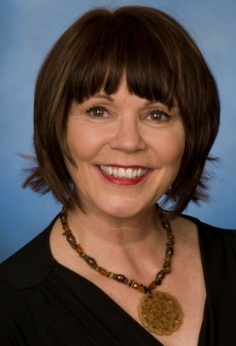 Independent online journalist Doni Chamberlain founded what’s now known as anewscafe.com in 2007 with her son, Joe Domke of the Czech Republic. Prior to 2007 Chamberlain was an award-winning newspaper opinion columnist, feature and food writer recognized by the Associated Press, the California Newspaper Publishers Association and E.W. Scripps. She lives in Redding, CA.


