
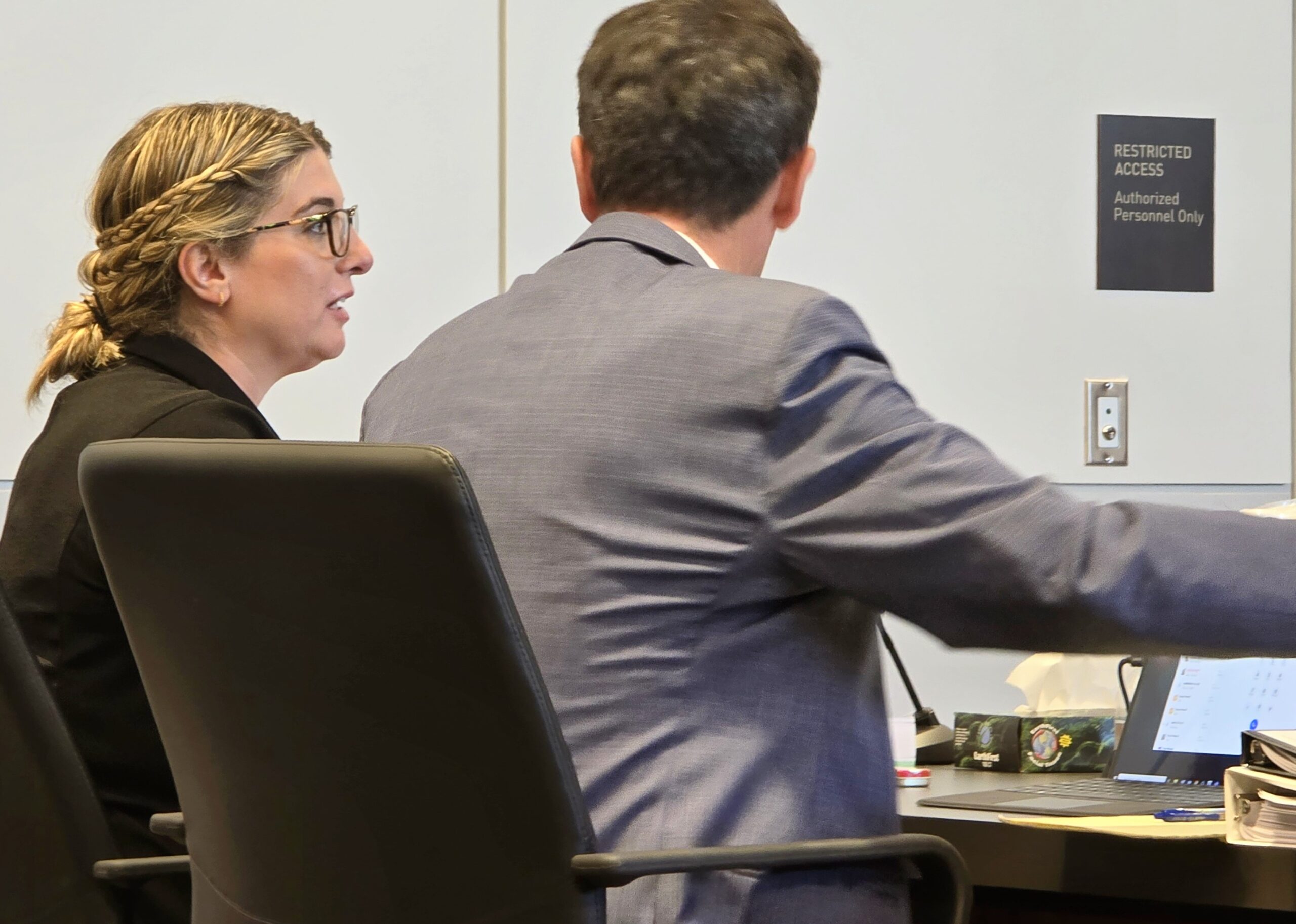
Assistant County Clerk/Registrar of Voters Joanna Francescut chats with elections attorney Christopher Pisano of Best Best & Krieger before Wednesday’s Hobbs vs. Long et al lawsuit hearing.
Let’s cut to the chase before wading into Wednesday’s tangle of legal weeds from Day 2 of the Hobbs vs. Long et al lawsuit hearing at the Shasta County Courthouse.
In short, no ruling was made by Shasta County Superior Court Judge Stephen Baker regarding election-denier/District-2-losing-candidate Laura Hobbs’ lawsuit.

Laura Hobbs.
Instead, due to unfinished business, unwritten briefs and unspoken arguments necessary for Judge Baker to render his ultimate decision, the hearing that began at 9 a.m. and concluded around 5 p.m. Wednesday ended with the scheduling of yet another hearing date, 9 a.m. on June 25.
That hearing, unless something goes seriously sideways, should see an end to the Hobbs lawsuit, one way or another. Will Hobbs prevail, and find her name on the November ballot in a run-off against the declared District 2 Supervisor winner, Allen Long?
Or will Baker rule against Hobbs’ lawsuit, and put an end to this legal insanity that began when Hobbs lost the District 2 Supervisor election to Long, and subsequently filed a lawsuit against not just Long, but Cathy Darling Allen, the recently retired former registrar of voters?
The Hobbs lawsuit
When first filed, Hobbs did so pro per, without an attorney.

Since then, she’s received legal representation from Alexander Haberbush, a nationally recognized election-denier revered by such election-denying notables as Jeffrey O’Donnell, Doug Frank, MyPillow CEO Mike Lindell and Clint Curtis.
-

- Jeffrey O’Donnell at Mike Lindell’s “Moment of Truth” conference last year.
-

- Dr. Doug Frank has been to Redding, welcomed by the Shasta County Board majority.
-

- Supervisor Kevin Crye is a repeat guest on the Lindell Report hosted by MyPillow CEO Mike Lindell.
-

- Clint Curtis was welcomed to Redding by the Shasta County Board majority.
Here’s some of what the Lex Rex Institute website says about Haberbush:

His zealous advocacy has won judgements as high as $8.9 million dollars for his clients. Alexander has worked on a variety of notable election integrity cases, including, most recently, Kari Lake’s challenge to the results of the 2022 Arizona gubernatorial election and Lacy v. San Francisco, fighting to overturn San Francisco’s law allowing non-citizens to vote in school board elections. Alexander has worked on behalf of such individuals as Alaska State Representative David Eastman, successfully defeating a lawsuit seeking to remove him from office for his political opinions, and entrepreneur Mike Lindell on various matters, including the unlawful seizure of his cell phone.
Frank, O’Donnell and Curtis have all been to Redding, welcomed by the Shasta County Board majority, especially by District 1 Supervisor Kevin Crye and District 4 Supervisor Patrick Jones.
Speaking of Curtis, according to Hobbs, who spoke on Terry Rapoza’s Jefferson State of Mine show Sunday, Curtis is one of the applicants for the open ROV position, joining Michael Gableman, whom Crye had previously stated he’d invited to apply, but also said Gableman had declined to do so.
It remains a mystery how Hobbs gained early access to that list. When asked by A News Cafe how she came to have the list of ROV applicants, Hobbs said she heard the information through the grapevine, which begs the question: Who’s at the root of the grapevine?
Bearing witnesses at Wednesday’s hearing
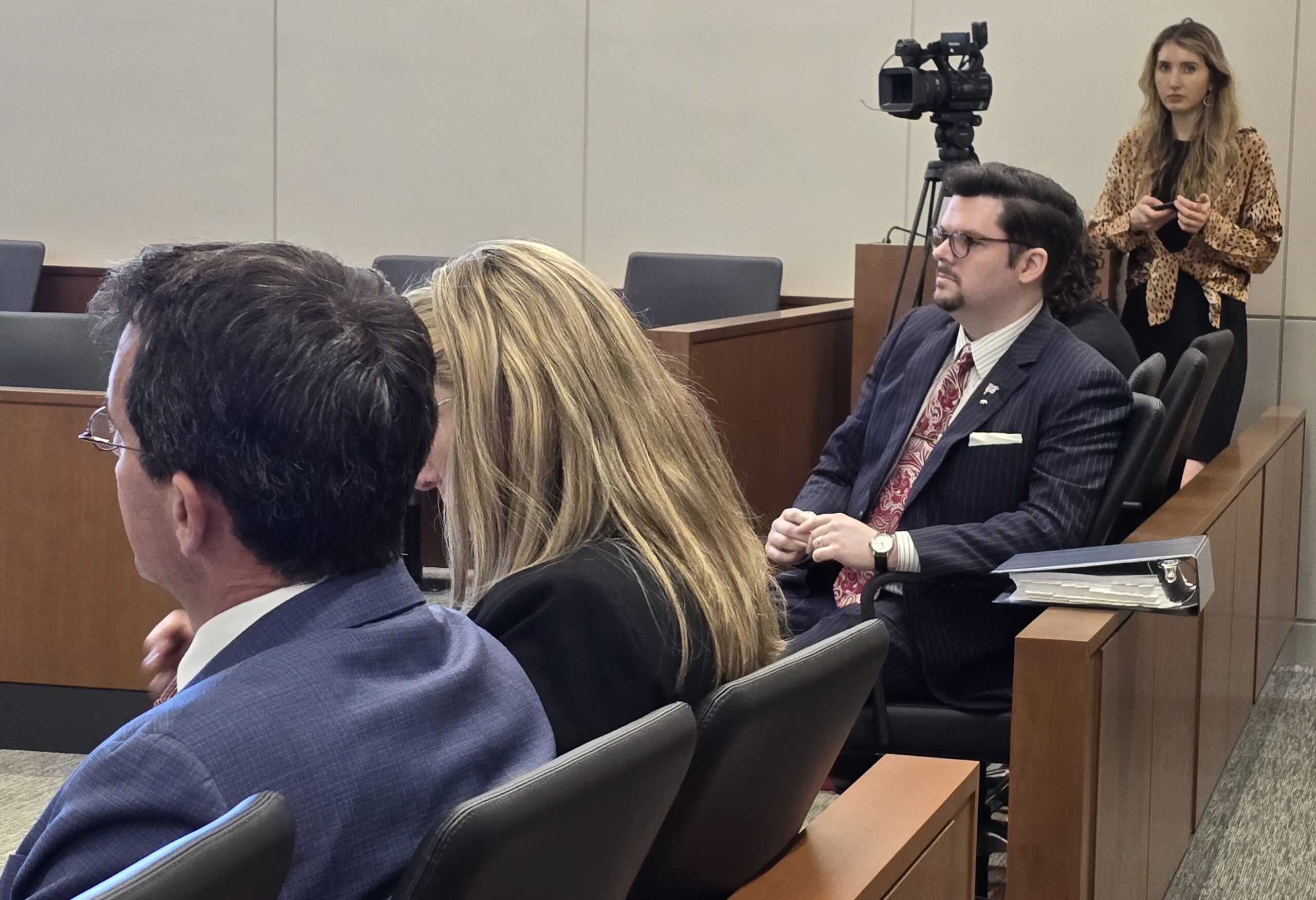
From left, attorney Christopher Pisano of Best Best & Krieger awaits the start of Hobbs lawsuit hearing Tuesday with Assistant County Clerk/Registrar of Voters Joanna Francescut, as Hobbs’ attorney Alex Haberbush looks on.
Initially, Judge Baker had designated two full days for the Hobbs hearing, a time frame deemed adequate by all involved parties when it was first scheduled on May 20, followed by yet another hearing on May 29, where Baker scheduled what was assumed the final hearing dates of June 11 and 12.
But those projections were before Tuesday, when room 64 of the Shasta County Superior Court was treated to outside attorney Alex Haberbush’s slogging style of hogging precious court minutes, as if both days were all his for the taking, leaving scarce remaining time to move things along quickly, or allow equal time for the county-hired attorney Christopher Pisano, who sat with Francescut as he offered legal representation to her, Long, and Darling Allen in Hobbs’ lawsuit.
Here’s some of what the Best Best & Krieger LLP (BBK) website says about Christopher Pisano, a founding partner of BBK’s Los Angeles office in 2005:
Christopher Pisano represents public agencies and private corporations in a variety of litigation matters, including land use, property valuation, water rights, health care litigation, unfair competition, inverse condemnation, construction, civil rights and general business disputes … Chris also successfully defended Shasta County’s Registrar of Voters against a lawsuit seeking a last minute court order to force the County to extend the deadline to collect signatures in the attempted recall of three supervisors. In less than one week, Chris and the BBK trial team prepared for trial and filed their opposition, earning a rejection of the suit.
As reported earlier, much of Tuesday’s hearing was consumed by Haberbush’s interrogation of Francescut, who was on the witness stand for much of the day.
Wednesday, Haberbush informed Judge Baker that he had as many as 14 or 15 possible witnesses to question, a statement that provided the first sinking inkling that there was no way the hearing would finish by the day’s end.

Assistant Registrar of Voters/County Clerk Joanna Francescut was on the witness stand most of Tuesday and a good portion of Wednesday as she answered attorney Alexander Haberbush’s questions.
First, Judge Baker opened the hearing with stern words of warning. He mentioned the previous day’s conflicts in the hallway outside the closed courtroom, and said he would not tolerate any bad behavior. He reminded everyone that this was his courtroom, not a board of supervisors meeting.
Ouch.
Judge Baker said he would take action immediately at the first sign of any disruption, in the courtroom or in the hallway. He said those in violation of his directives would be arrested and taken into custody.
Next, Haberbush introduced his exhibits, the voting audit logs in particular, that were on electronic spreadsheets. He said that if printed out, the information would equal about 90,000 pages. That number was up 70,000 pages from his previous day’s statement that the spreadsheets would equal 20,000 pages. Either way — 90,000 pages or 20,000 pages — it was a stunning number of pages to consider.
Haberbush and Judge Baker went back and forth regarding how to identify which parts of those pages were being referenced, and when. Discussions of thumb drives and No. 42 versus No. 47 versus number whatever was difficult to follow.
Spreadsheet talk put aside for the moment, Francescut was called as Haberbush’s witness again. As with Tuesday’s hearing, Haberbush fired one question after another at the assistant county clerk/ROV.
A stoic Francescut took her time and gave thought to each reply.
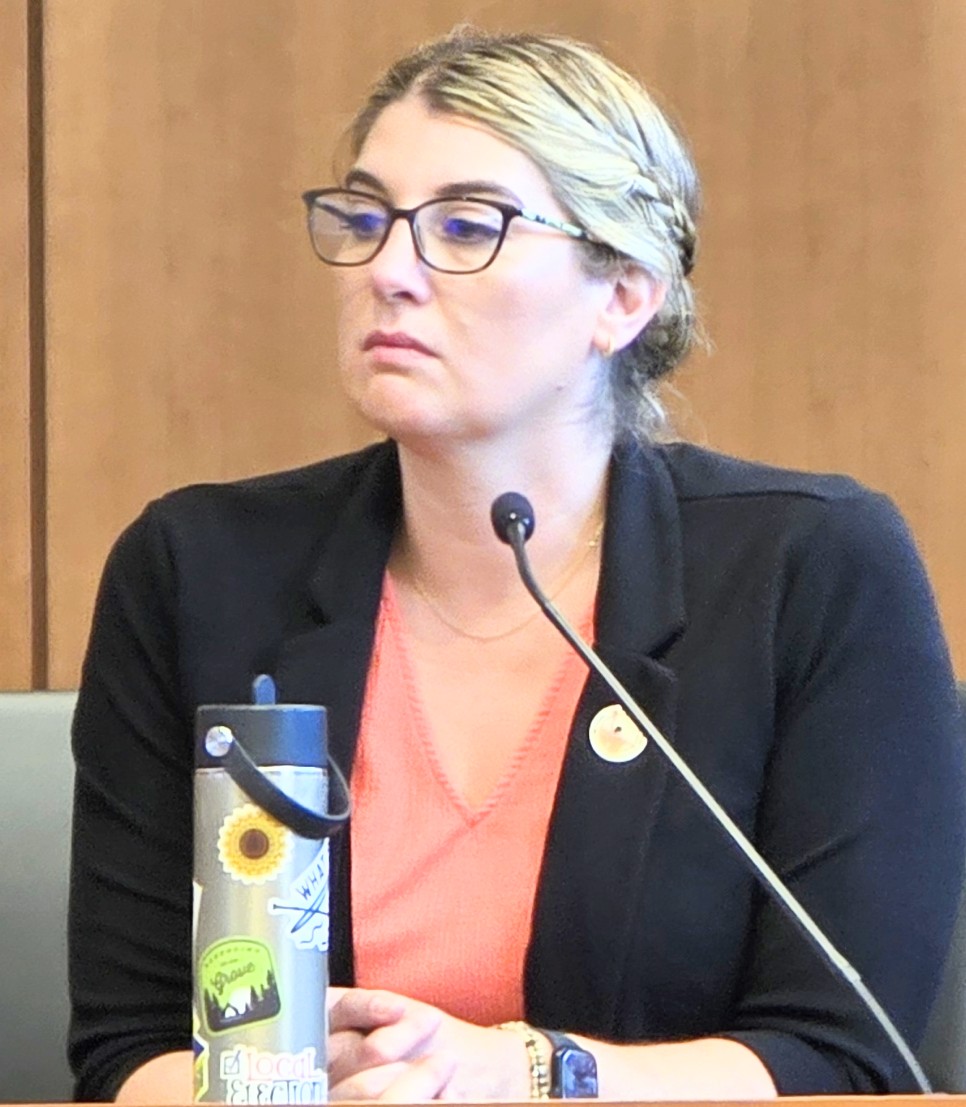
Once again, Haberbush focused on audit logs, election machines, scanners, election department staff members, tabulations, the 1% hand count, ballot-proofing, election observers, Hart InterCivic voting machines, and repeated references to the “alpha draw” that determines the order in which candidates’ names appear on the ballot.
Haberbush’s questions covered a wide range of topics that left no stone unturned on his quest to find even the most seemingly insignificant pebble of a detail that might strengthen Hobbs’ case, and give her a second bite at the District 2 Supervisor contest in the November election. But even after interrogating Francescut hour after hour over two days, her replies revealed zero smoking guns.
Haberbush’s biggest potential got-cha point was the already addressed alpha-way of determining candidates’ name placement on the ballots, based upon whichever letters of the alphabet were randomly chosen. Francescut had acknowledged that a mistake occurred when some less-experienced staff members mistakenly used the local alpha way system rather than the Secretary of State’s.
The biggest blow to Haberbush’s puny got-cha nugget is the fact that the ROV’s office did use an alpha-way system; albeit a local one, not state.
If the entire premise of Hobbs’ case rests upon her claim that she would have won the District 2 election, if only the ROV office had used the Secretary of State’s alpha system, rather than the local one, then that premise would call into question other Shasta County races, too. For example, the names of District 5 incumbent Patrick Jones and District 3 candidate Win Carpenter were high up on the ballot, but yet, they were both soundly defeated in the March 5 election. Clearly, having their names placed above other candidates on the ballot did not make them winners.
Attorney Pisano frequently objected to Haberbush’s questions on the grounds they were vague, irrelevant, incomplete, hypothetical, argumentative or lacking foundation. Sometimes Judge Baker sustained Pisano’s objections, and sometimes Judge Baker overruled them.
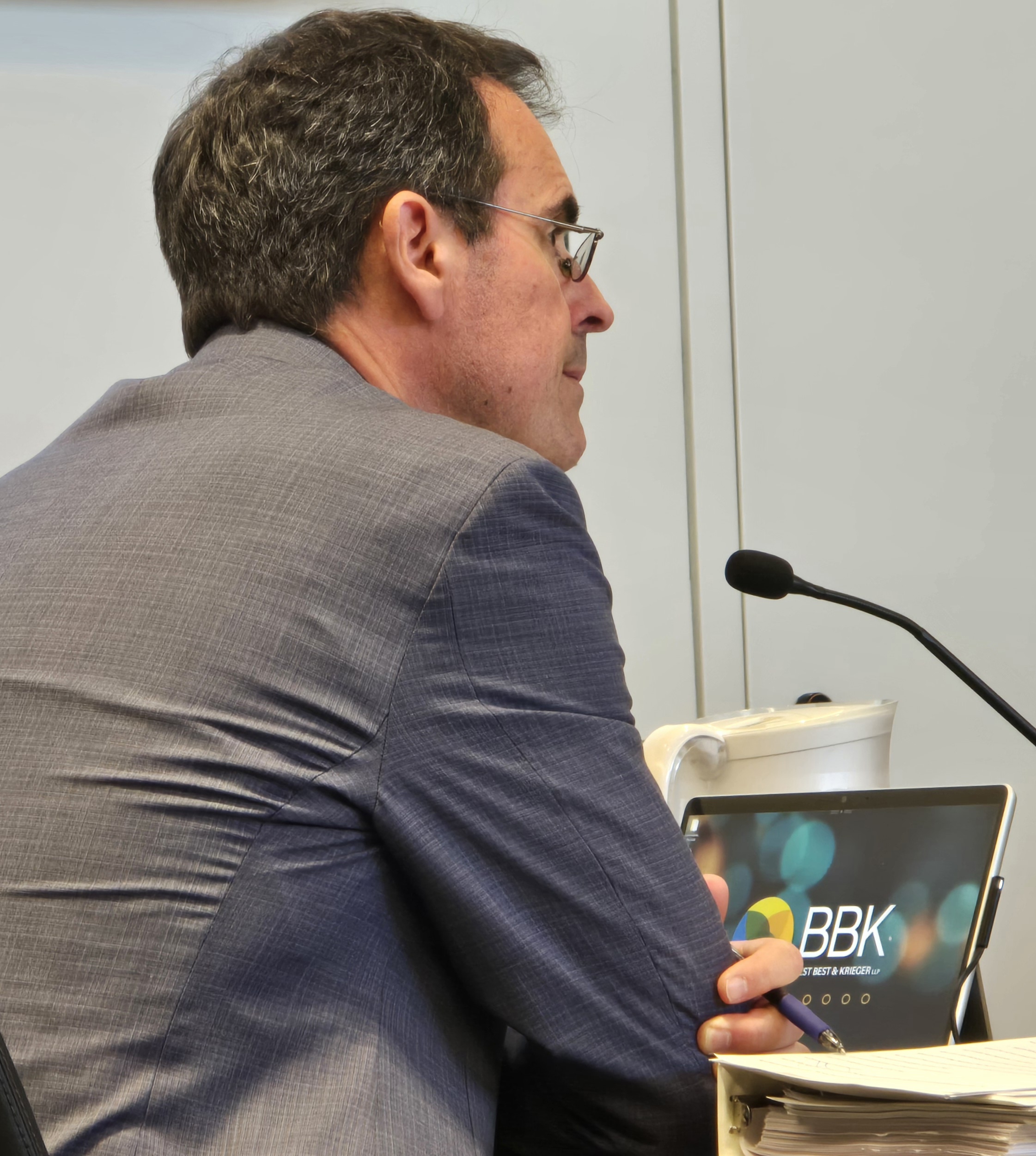
The same was true when Haberbush objected to Pisano’s questions, as Judge Baker sometimes sided with Haberbush, and sometimes with Pisano.
Once, after Judge Baker had overruled a Haberbush objection, Haberbash pushed backed and argued, which resulted in a rebuke from Judge Baker to Haberbush for being argumentative. Judge Baker reminded Haberbush that as the petitioner, Haberbush had the burden of proof. Haberbush apologized.
At one point, in a rapid-fire volley of Haberbush’s questions that produced an equally rapid-fire stream of Pisano’s objections, Pisano said, “Objection, vague,” to which Haberbush laughed and said, “That is vague!”
-

- Attorney Christopher Pisano of Best Best & Krieger LLP represents Shasta County.
-

- Attorney Alex Haberbush of the Lex Rex Institute represents Laura Hobbs.
After an intense session of Haberbush’s non-stop questions, Francescut said she needed a break.
Fifteen minutes later court was in session with Francescut on the witness stand again. Judge Baker asked Haberbush how many witnesses he planned to call, and approximately how long did Haberbush guess it would take to hear all the witnesses. Haberbush replied that he thought it would take about another 30 minutes to question Francescut. He said he didn’t think it would take long to work through the 15 witnesses, a statement that caused some audience members to raise their eyebrows in collective disbelief.
Haberbush questioned Francescut about an Oct. 6, 2022 All Things Considered NPR news podcast in which Francescut was interviewed. Haberbush sought the inclusion of that information as evidence that Joanna considered election observers as obstacles.
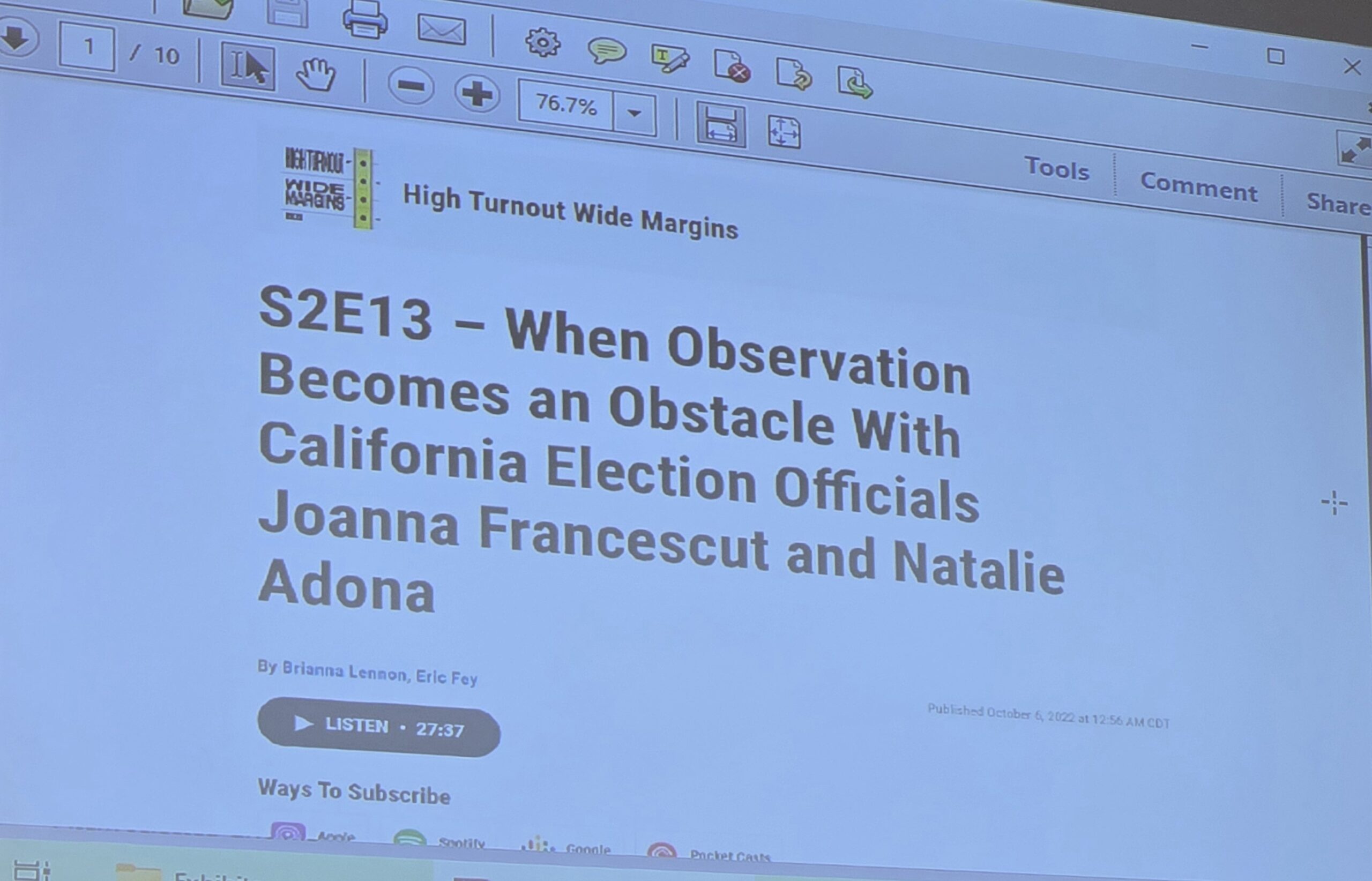
Judge Baker countered that he’d read the transcript, and the two specific passages directed by Haberbush.
“In neither place does she refer to observers as obstacles,” Judge Baker said.
Haberbush asked Francescut if she ever communicated with staff on Facebook, to which Pisano objected, and Judge Baker sustained.
Haberbush asked Francescut to recall exactly how many times she was in contact with former ROV Cathy Darling in the office following her medical leave of absence, how many times Darling Allen had visited the office after her departure, and how often they spoke on the phone, to which Francescut said she couldn’t remember precisely.
When it was Pisano’s turn to question Francescut, he asked whether the previous Dominion voting system automatically took care of the order of candidates’ names on the ballot, while the new Hart system did not. Francescut said yes, that was true.
Pisano asked Francescut about some of the significant changes within the ROV office, which Francescut said included implementing and getting up to speed regarding some new election laws, and having to lay off staff who had been hired following the board majority’s vote for a hand-count ballot system.
“I had to lay off staff a few weeks leading up to Christmas,” Francescut said. “And shortly after that I took over Cathy Darling Allen’s roll and her job. It was a critical time. So many deadlines.”
Haberbush objected, and said Francescut had answered outside the realm of questioning.
Expert witness? Yes, or no?

Steve Umfleet. Photo source: LinkedIn.
One of the most confusing parts of Wednesday’s hearing arrived with the inclusion via live stream of one of Haberbush’s witness, software engineer Steven Umfleet. The screen faced away from the galley, so he wasn’t visible. But his voice and testimony were heard by everyone in the room.

The source of the contention between Haberbush and Pisano regarding Umfleet’s testimony was that Haberbush’s line of questioning made Umfleet a defacto expert, which Pisano pounced on by questioning Umfleet’s qualifications as an elections expert. Umfleet said he was an analyst who’d done verification on “lots of image data” such as DNA sequences, fingerprint verification and investigating election data, voter rolls, election audit logs and “post election integrity”.
He’s also been featured on podcasts in which he offered opinions regarding elections issues.
Haberbush explained that Umfleet wasn’t an expert witness, to which Judge Baker said that based upon Haberbush’s line of questioning (about elections data), Umfleet was being introduced as a witness.
Pisano objected and rapidly delivered a series of questions that eventually led to Umfleet admitting that basically, his interest in elections data was an intense hobby.
“How would his opinion be any more valuable than a newspaper boy down the street?” asked Pisano, after asking Umfleet for his proof of professional credentials in elections, and finding none.
“If he’s not being offered as an expert, that makes my job easy,” Judge Baker said with a smile. “He won’t be offering any expert testimony.”
Even so, Haberbush forged ahead. When he asked if Umfleet had analyzed Shasta County election data, Umfleet said he had.
Once it was established that Umfleet was not a bona fide elections expert, Pisano piped up with objections every single time Haberbush asked Umfleet a question that remotely resembled an inquiry in the realm of expert information.
When Umfleet said he’d looked at 375,000 lines of Shasta County election data provided by Hobbs, Pisano asked how long it had taken Umfleet to check that quantity of data. Umfleet guessed about 24 hours, but said the process was sped up with the use of filters.
Pisano looked skeptical.

Attorney Christopher Pisano.
Judge Baker tactfully observed that although Umfleet was “clearly a smart individual” who had experience with large amounts of information, Umfleet could not testify his opinions regarding election data.
A second ROV office employee takes the stand
Although Haberbush had stated earlier his intention to call several elections department employees as witnesses, after a discussion between Judge Baker, Pisano and Haberbush it was decided that Joanna had already provided many hours’ worth of testimony regarding all aspects of the ROV’s office. The compromise was testimony from one other ROV office employee, Anna Rodriguez.
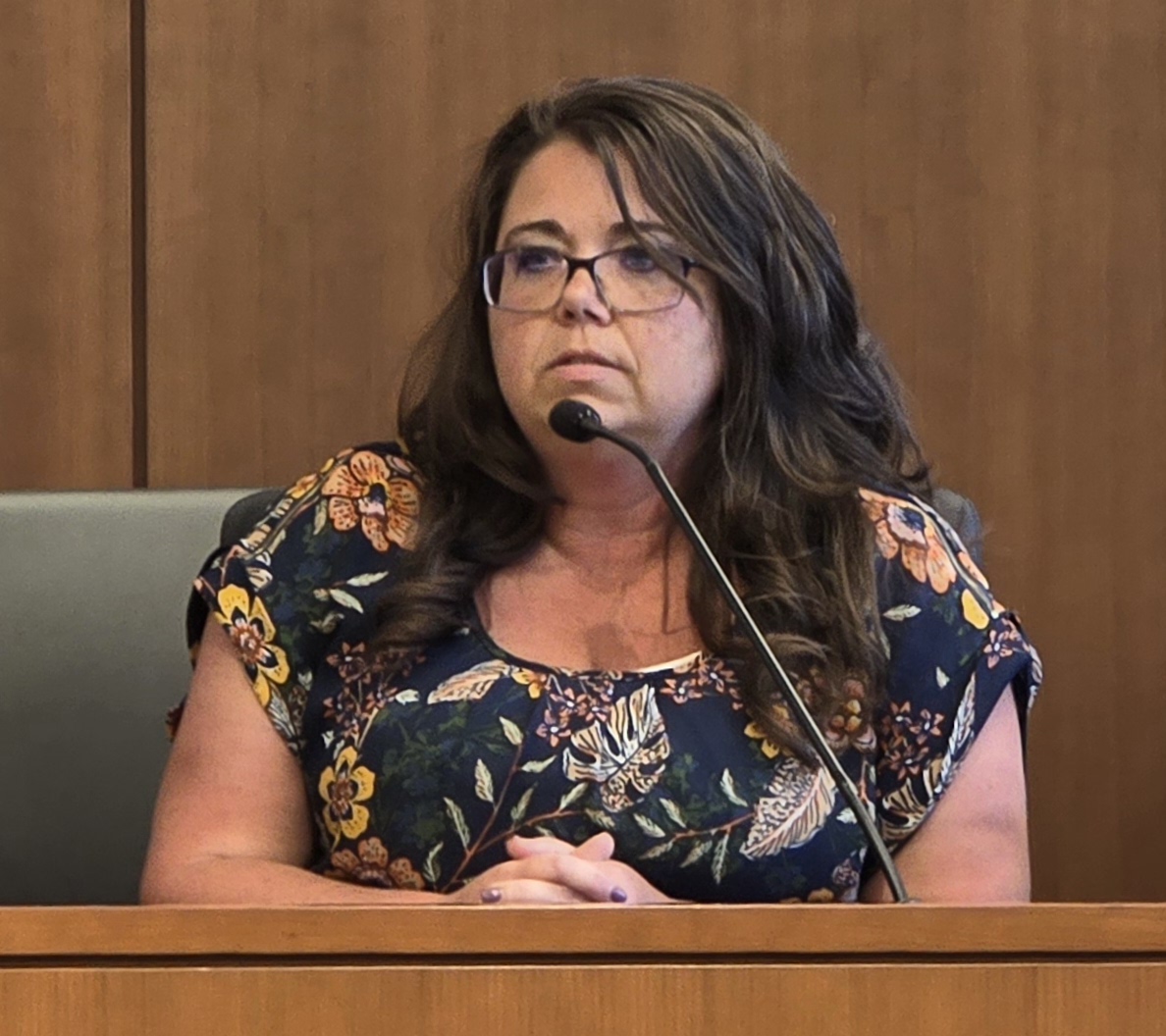
ROV office employee Anna Rodriguez.
Haberbush asked Rodriguez many of the same questions he’d asked Francescut, although as a witness who’d been asked to leave the courtroom at the start of the hearing, Rodriguez had not been present to hear Francescut’s responses.
When Haberbush questioned Rodriguez about who did what duties inside the ROV’s office during an election, she replied that many people worked together. She acknowledged that she’d “missed it” with regard to reviewing the alpha draw, an incident that was compounded by her necessary reliance upon the only two staff members available at the time, because the rest of her large team was already occupied with other duties.
“It was an accident,” Rodriguez said. “They used the local alpha draw for the local election.”
Election observer witnesses
-
- Rayleen Stine.
-

- Jim Burnett.
-

- Antonio Palacio
-

- Richard Gallardo
The hearing’s final stretch featured four people who had worked as election observers at the Shasta County Elections Office, all of whom had various complaints.
Haberbush introduced his colleague Deborah Pauly to take over that phase of the witness testimonies.
Here’s some of what the Lex Rex website says about Deborah Pauly:
Deborah Pauly.
For more than 15-years, Deborah Pauly has been a popular speaker and radio show guest known for blunt honesty, speaking the truth boldly and articulating a common-sense approach to current political and public policy issues. Deborah employs humor, godly wisdom and a Conservative-libertarian slant. She is often on the speakers’ circuit offering analysis of statewide ballot propositions.
But first, when Judge Baker asked Pauly for clarification of the spelling of her first and last name, Pauly recited it using the law enforcement phonetic alphabet, and added that her first name was spelled the biblical way.
It was difficult to read Judge Baker’s reaction to name-‘splaining from an outside attorney.
Nevertheless, Pauly plowed ahead with her questions, starting with Rayleen Stine of Sonoma County, who’d worked as an elections observer in Healdburg, Santa Rosa and Shasta County. Stine’s main complaint about the Shasta County elections office was limited visual access during her visit, which lasted less than two hours.
“I tried to stand close, but they told me to sit,” Stine said. “I asked if I could access the live streaming recording later to review, and they said ‘no’.”
Retired reference librarian Jim Burnett said he was at the ROV’s office on March 11 and March 27 where he watched the output of the Hart machines via large video monitors. He said he documented rejected, rescanned ballots, and that out of 38 scans he observed, 19 had to be rescanned.
After Pisano objected to one of Pauly’s questions, Pauly explained she wanted to understand what was happening with regard to Burnett’s testimony.
Judge Baker chastised her.
“What you want, counselor, is not really relevant,” Judge Baker said. “Now you’re just testifying.”
Caregiver Antonio Palacio said she’d been a Shasta County elections observer many times. She said she didn’t like how far away the ballots were from her. When Pauly asked why Palacio worked as an elections observer, she replied that she felt it was her duty to take part in what was happening in the elections.
Gung ho Gallardo

As a witness at the Hobbs v. Long et al hearing Wednesday, Richard Gallardo claimed under oath that he did not bring a gun to the ROV’s office.
The final election observer to testify was Richard Gallardo, a renowned Shasta County militia member and Second Amendment devotee who’s committed to making open carry in Shasta County a reality. Gallardo has also been a devoted supporter of Hobbs and her campaign, to which he contributed $3,000.

A controversial far-right Shasta County character, Gallardo is probably best known for his failed 2020 citizens’ arrest attempt of an entire board of supervisors (and county staff). He was also fired from his CAL FIRE job for brandishing a weapon at work, and is renowned for delivering heated verbal rhetoric during public comment periods.
-
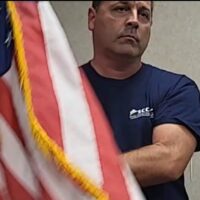
- Richard Gallardo brought a flag to a League of Women Voters’ event.
-
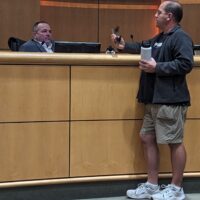
- District 4 Supervisor Patrick Jones chats with gun enthusiast Richard Gallardo.
-

- Richard Gallardo failed at his attempt to arrest the Board of Supervisors in October 2020.
-

- Richard Gallardo joins the crowd who came in the back door of the elections office on Primary Election Night 2022.
Most recently Gallardo pepper-sprayed local community activist Nathan Pinkney after Pinkney had served Gallardo with temporary restraining order papers inside the Shasta County Elections Office, where Gallardo was acting as an elections observer.
Later, when Pinkney posted a video and photos on social media of him serving Gallardo, a photo drawn with a red circle identified a handgun-shaped outline visible beneath Gallardo’s shirt.

On the witness stand Wednesday, Gallardo described himself as someone retired from military, and a former firefighter. Gallardo said he’d been an elections observer since the 2022 Leonard Moty recall, and that most recently he was an observer of the March 2024 primary election. Gallardo spoke at length about what he deemed a violation of the election department’s “rule of two”; when two elections personnel are supposed to work together on elections duties.
“I believe our election system has flaws,” Gallardo said.

When it was Pisano’s turn to question Gallardo, Pisano asked if Gallardo had ever lobbied the supervisors to provide more money to the elections office, so there could be more staff available. Gallardo said he had not.
Then came an unexpected question from Pisano, one that hadn’t been asked of anyone else.
“When you went to observe the process, did you bring a gun with you?” asked Pisano.
Anyone dozing in the galley was suddenly wide awake.
Gallardo, usually a man of many words, this time had just one: “No.”
Although Gallardo and the other three witnesses shared criticisms about the ROV’s office, none of their statements proved a correlation between their complaints, Hobbs’ lost election, or the outcome of any part of Shasta County’s March 5 election.
Hobbs, at last
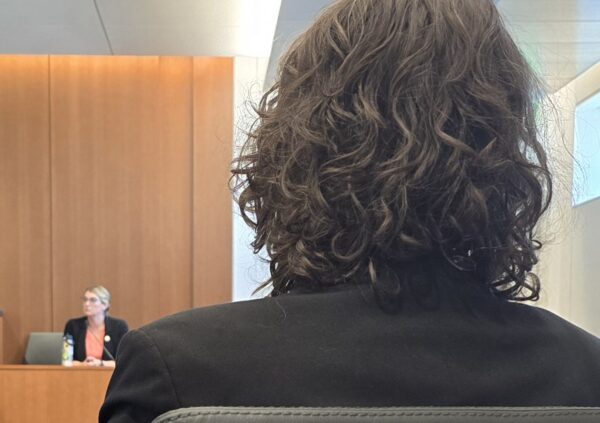
Finally, after sitting quietly through two days’ of hearings, Wednesday’s last witness was Laura Hobbs.
Haberbush asked Hobbs about her numerous public records requests to the ROV’s office, specifically what she requested, when the requests were sent, and when she received a response.
Hobbs said that at one point she threatened legal action against the elections department if she did not receive her requested documents more quickly. She said the threat worked, and she did eventually receive the requested audit-log information on May 20 via a USB stick.
Haberbush asked if Hobbs had made any changes to the audit logs, to which Hobbs replied no.

Laura Hobbs.
The last words: Onward to the next hearing
A News Cafe reached out to Francescut for comment Thursday. She had this to say about the lawsuit and upcoming hearing:
“The case is not over, but we feel good about it and are hopeful the judge will see it our way,” Francescut said.
“On June 25th, the court will hear our motion for a judgement that argues the plaintiff hasn’t made a case and requesting a judgement without us having to provide any evidence.”
Meanwhile, next week the Shasta County Board of Supervisors begins the process to select an ROV to replace Cathy Darling Allen. Francescut has submitted her cover letter and resume. She was among the original 39 applicants; 15 of whom made it to the next level. There are currently 9 remaining applicants expected to proceed to the next interview phase, which will take place June 18 – 19 in the Shasta County Board of Supervisors chambers. The interviews are open to the public.
Between now and June 25 — between the board’s selection of a new ROV, and Judge Baker’s decision of the Hobbs lawsuit — it’s a matter of life and death for not just Joanna Francescut’s career, but Shasta County’s election integrity and stability.
All we can do is wait and see.
###


