
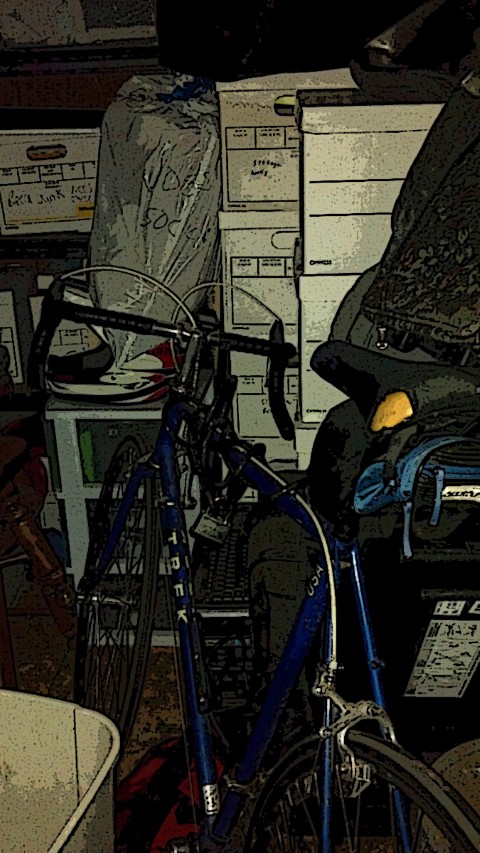
I just filled 22 boxes with stuff my son left behind. He’s in boot camp right now, probably marching about in a chill wind blowing off Lake Michigan as he prepares for his life in the US Navy.
People ask if I miss him, and I tell them that I will when I realize that he’s actually gone. That hasn’t happened yet because I’m still doing the laundry he left behind, a pile the size of a Volkswagen bus.
I tried to keep this deferred disaster from falling to me. Before he left, I pulled Joe’s stuff out of the garage and put it in his bedroom. I said, in my most commanding voice, that he needed to sort it into three orderly stacks: “to store,” “to donate” and “to toss.”
So Joe began to wrestle with his massive mess. At times, he’d push the pile from one side of the room to the other, creating an impressive mound that was only slightly smaller than Mount Shasta.
When he tired of this, he began burrowing, turning over his laundry to find sought-after objects—and enhance the bacterial composting action. Apparently Joe hoped his stuff would just biodegrade away. And when it didn’t, he sat staring at it in deep contemplation—while he played on his X-Box. In the end, Joe produced a whopping two donation boxes. I realized this after his recruiter whisked him away, and I returned to find everything else in an aromatic heap.
And, amazingly, that wasn’t the only mess he left behind.
His old Ford Tarus sits in the driveway. I bought it so I could quit riding my bike to work as winter arrived. But before I could drive it, I had to dig my way in. The cab contained an odd assortment of guy-supplies. There were three sleeping bags in various stages of decay, a tent—less poles, two canvas sacks containing saws and knives, five or six thousand Skittle wrappers, and one unopened manicure kit.
I suppose he was saving it for something REALLY special.
Then the trunk practically exploded when I popped the hatch. It contained more books than you’ll find in most school libraries these days—scores by Orson Scott Card and scores by other, lesser-known, science fiction authors. Under those I found dozens of water bottles, about three tons of dried food, and a paintball gun with several bazillion rounds.
In short, everything you’d need to survive a zombie invasion.
I boxed all this up, too.
So after hours of work, my barn was crammed with these Joe-boxes, his two bicycles, video games and a drum set—all my son’s worldly goods.
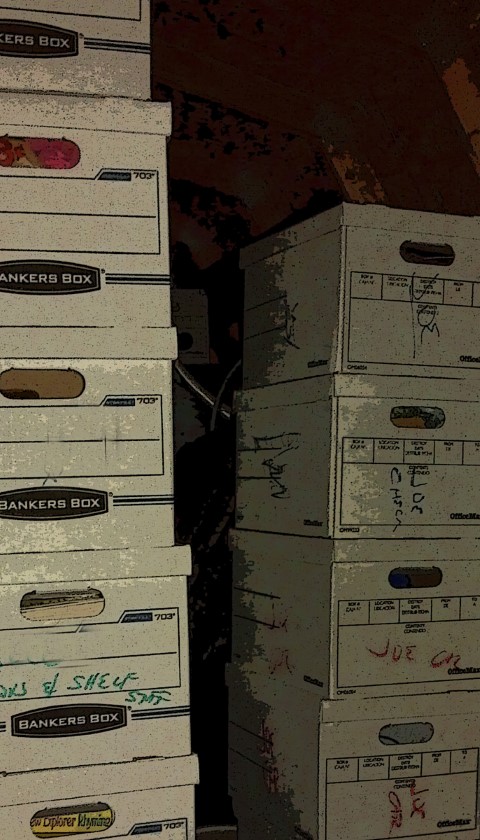
Almost.
A week after he left, we got yet one more box from Joe, courtesy the RTC—Recruitment Training Center. It contained everything he had on him when he arrived at the base. We were warned that we’d get this package by the videos and emails from the Navy Mom’s website.
They told us to expect the “Boy in a Box.”
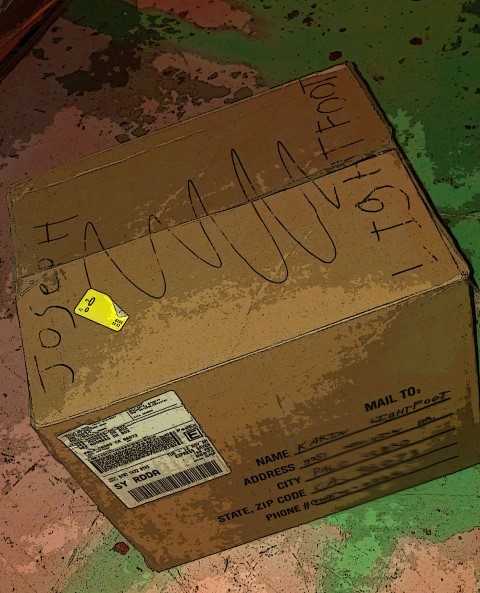
What was in it? Well, the most conspicuous item, the one that topped the others, were his pants. They were not folded, or even wadded up as we’d so often find them on the floor of his room. Instead, they looked like he’d stepped into the cardboard container and just dropped his drawers.
Sandwiched around them were his cell phone, a calling card, pre-addressed envelopes and stamps that we’d given him to write home, his jacket, shoes, and a sock.
Just one.
I pondered this. A friend had told us that, upon arrival, the recruits disrobe and run around in their underwear—and a single sock—to condition them to follow orders—no questions asked.
What I didn’t know was that the sock would be his fetid footwear. An unsettling scene comes to mind here… hundreds, perhaps thousands, of young men strutting in their skivvies and each one wearing a single, smelly sock. Ah the humanity… I guess the RTC wastes no time in preparing recruits for combat.
But what, then, does the Navy do with this orphan apparel? Do they use it for biological weapons research? Do they send it to Gitmo to use to extract secrets from our enemies? Would the Geneva Convention even allow it?
So many unanswered questions… It makes me glad that this is all highly-classified information.
But the Boy in a Box did make me smile and miss our Joe. Boot camp means that we go long stretches without hearing anything from him, and he’s on my mind constantly. Yet I think we’re handling this transition better than some recruits and their families. Karin says the Navy Mom’s website is full of mothers who are agonizing over their suddenly-silent homes. And one reported that her son’s pants contained a felt marker and a hastily-penned note of just two words: “Holy shit.”
Our box contained nothing so telling. But its arrival did signal the end of one way of life, for both our son and us, and the beginning of another. I know that boot camp will condition him to have greater stamina, work on a team, and—I hope—keep a tidier room a bit more often. His emergency training will enable him to handle the unexpected. That’s a good thing, too. He’s going to need that skill someday—when 22 boxes appear on his doorstep.
Go Navy.
 Robb has enjoyed writing and performing since he was a child, and many of his earliest performances earned him a special recognition-reserved seating in the principal’s office at Highland Elementary. Since then, in addition to his weekly column on A News Cafe – “Or So it Seems™” – Robb has written news and features for The Bakersfield Californian, appeared on stage as an opening stand-up act in Reno, and his writing has been published in the Funny Times. His short stories have won honorable mention national competition. His screenplay, “One Little Indian,” Was a top-ten finalist in the Writer’s Digest competition. Robb presently lives, writes and teaches in Shasta County.


