

 With each season comes a new forum hosted by the Women’s Fund of the Shasta Regional Community Foundation. ” Foster Care: Who’s Raising Our Children?” was the subject of the Jan. 25 winter forum held at the Shasta County Library in Redding.
The sold-out lunch-time forum featured four speakers: Marta McKenzie, director of the Shasta County Health and Human Services Agency; Molly Bigelow, presiding judge, Dependency Court, Shasta County Superior Court; Lisa Tange, deputy director, San Diego Field Office of the Casey Family Programs; and Denise Ratliff, a former Shasta County foster youth. A brief question-and-answer session followed the presentations.
McKenzie went first, and good-naturedly powered through her prepared presentation despite electronics difficulty that left her without computerized visual aids. But her message came through clearly – if not depressingly – enough. We learned that Shasta County has among the highest numbers of youth in foster care in the state. We learned that Shasta County’s Child Welfare Budget spent $8.9 million in foster care placement. And we learned that even when a foster child is adopted, the county’s financial obligation to the child remains. We also learned that young women in Shasta County give birth to babies two years sooner than the rest of the nation.
Judge Bigelow shared her philosophy that every child has a right to live in a safe, secure home. She said that ideally, foster care was intended as a temporary solution, not permanent placement. Bigelow said that much thought and reflection goes into each case that’s brought before her, and that she is acutely aware that she forever changes the lives of every child she removes from his or her parents. Bigelow said she doesn’t make those decisions lightly.
Tange, who came from San Diego to participate in the forum, reminded us that foster care can be a very emotional topic. She said that problems with education, employment and mental health issues follow many foster youth throughout their lives. She pointed out that the foster youth’s biological parents are an often forgotten part of the picture, and she challenged people to watch their biases, and gave examples such as “The apple doesn’t fall far from the tree.” She said that most people don’t want to lose their children, but such issues as mental illness, drug abuse and poverty make foster care a necessity. She shared some statistics, too, such as that California is No. 1 in the number of youth in the foster care system, and our state is No. 2 in child deaths.
Lange pointed out the distinction between child neglect and abuse, and said there is some degree of hope with neglect. She said that at least with neglect, there’s a potential opportunity to help turn the negative parenting tide by helping provide resources. She said that our quality standard for foster youth should be the same as for our own children.
Finally, Denise Ratliff, a former foster youth, spoke. She shared her story of a neglected childhood that resulted in her being placed in foster care at age 6. She said that her perspective wasn’t so much that she was taken from her parents, but saved, especially when she was placed with a loving foster couple, Phil and Linda Rocke, when Denise was 13. Ratliff teared up a bit as she spoke about some of her roughest years, when she lived with her biological father, who was abusive in nearly every way. Ratliff presented herself as someone who is not just a survivor, but a thriver who’s working on legistlative levels to help improve the foster care system and other foster youths, and is also attending Shasta College.
The audience gave Ratliff a standing ovation at the conclusion of her talk.
The afternoon foster care forum packed a lot of information in just one and a half hours. But bringing information to the community is precisely why the Women’s Fund exists. Its members believe that information has the potential to create a pathway for citizens to better understand issues that impact our community as a whole and us as individuals.
Regarding why the Women’s Fund offers the forums, its website explained it this way: “Local and outside expert speakers at the Forums give us a sobering look at the topic at hand and they help provide insight into possible means for creating a better tomorrow.”
—-
More information about …
The Women’s Fund of the Shasta Regional Community Foundation: was founded out of concern for persistent challenges facing women and families in the great Redding area.
California Youth Connection: California Youth Connection (CYC) is guided, focused and driven by current and former foster youth with the assistance of other committed community members. CYC promotes the participation of foster youth in policy development and legislative change to improve the foster care system, and strives to improve social work practice and child welfare policy. Meetings are the first and third Thursdays at the CYC office, 1650 Oregon St. Ste.111, Redding. Meeting times are from 5:30 to 7:00 pm.
CASA — (Court Appointed Special Advocates) : A national program dedicated to providing quality court advocacy services to abused and neglected children under the jurisdiction of the Dependency Court.
Shasta County’s FOSTER Program: Works with Shasta County foster care youth. The FOSTER program is designed to increase youth’s 40 developmental assets through meaningful and productive activities.
YESS (Youth Empowerment Strategies for Success): Students, primarily current or former Shasta College foster youth, who achieve excellence from empowerment via weekly meetings that provide support and tutoring, as well as classes in financial planning, life management and college success. For information, email: info@shastayess.org.
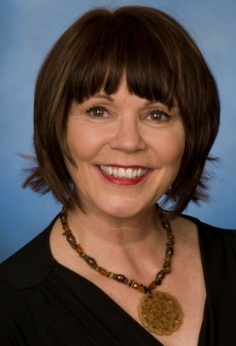
Independent online journalist Doni Greenberg founded what’s now known as anewscafe.com in 2007 with her son, Joe Domke of the Czech Republic. Prior to 2007 Greenberg was an award-winning newspaper opinion columnist, feature and food writer recognized by the Associated Press, the California Newspaper Publishers Association and E.W. Scripps. She lives in Redding, CA.


