
Native Americans are thought to have used fire to manage native vegetation to facilitate hunting and acorn collection, improve habitat for game, stimulate the growth of vegetation used for weaving baskets or making tools, and convert dense brush fields to grasslands. Prior to the arrival of Euro-American settlers, the mean fire frequency in California oak woodlands was three years. Now, major fires in oak woodland and chaparral plant communities in California occur approximately every 30 to 50 years (“Oaks in the Urban Landscape,” Costello, Hagen and Jones, University of California, Publication 3518, pg. 209).
Over the last 100 years, humans have been very successful at suppressing fires, inadvertently increasing the risk of high intensity wildfire by allowing high fuel loading conditions in the vegetation under the oaks. Many landowners and managers, understandably interested in decreasing fire risk on their land, are conducting aggressive fuel reduction treatments that can cause damage to wildlife habitat, especially for at-risk species.
Near our homes, fire-safety is paramount, and there are clear guidelines for fire-safe landscaping within the 100 feet of defensible space required by the state. Beyond the boundary of these requirements, however, we can use a lighter touch and protect the woodland ecosystem. Brad Henderson, Environmental Scientist at California Department of Fish and Wildlife (CDFW), advises, “Be gentle out in the habitat.”
This article focuses on keeping oak woodland wildlife habitat on your property, or enhancing what you have, beyond the required 100 feet defensible space closest to your home, deck and buildings. If you need information on how to create fire-safe landscaping close to your home and learn about the 100-feet requirements, check out Cal Fire’s defensible space guidelines at www.readyforwildfire.org, and University of California’s “Home Landscaping for Fire” at https://anrcatalog.ucanr.edu, publication 8228.
Henderson said, “You should replace plants that are around the house with less flammable ones; CalFire has a list. I’m planting rows of succulents as fuel breaks around my house. YouTube has ideas on how to do this.” Check this out at https://www.youtube.com/watch?v=JrP2h2li8ps
As a conservation biologist who has worked with Shasta Land Trust, California Department of Fish and Wildlife, and Carter House Science Museum, I have dedicated my career to protecting oak woodlands. Now I’m working on a plan to make my family’s west-side acreage and home more fire-safe, while keeping our oak woodland wildlife habitat intact. My goal with this article is to give you some ideas of how you might plan your fire-safe landscape projects in a way that benefits individual trees and shrubs, and protects wildlife habitat, recognizing that, of course, fires can be unpredictable and every property is different. While I’m focusing on oak woodlands, many of these ideas can be used in coniferous forests as well.
Why protect the oaks?
Oak woodlands are increasingly in jeopardy from development. The California Oak Foundation projects that 1 million acres of oak woodland will succumb to development over the next 30 years, and 750,000 more acres will be threatened. That’s on top of the million acres of oak woodland already lost to development since 1950. Other threats to oaks include lack of regeneration due to competition from non-native grasses, grazing pressure, soil compaction, and diseases such as sudden oak death syndrome. (Taken from Audubon.org -2018).
Most California oaks are not protected by the California Forest Practice Act on private timberlands; for those located on non-timber private lands, there are only voluntary guidelines in place to protect oak woodlands in Shasta County. Investment in oak habitat protections now can provide secure wildlife habitat for the future. Eric Haney, at CDFW, says, “We have been concerned about rapid loss of oak woodlands in Shasta County for some time.”
By 2006 numbers, from “Oaks 2040: the Status and Future of Oaks in California” by Gaman and Firman (2006). Shasta County oak woodland is most at risk within the North Interior Region, which includes Shasta, Siskiyou, Lassen, Modoc, and Trinity counties. In Shasta County, 15 percent of oak woodland has been developed and 5 percent additionally may develop by 2040. Total acres of cover where oaks are present in Shasta County is close to 300,000 acres.
Native animals use oak woodlands
Oak woodlands are extremely valuable to wildlife, not only because of the high food value of acorns, but also because they provide locations for nesting and feeding, and support an abundant insect fauna. These insects support large breeding bird populations and provide an important food source to bird migrants on their way to breeding grounds. Wildlife species use all parts of an oak tree and the other trees and shrubs around them: western gray squirrels nest in the branches, and hawks use their crowns to search for prey, while acorn woodpeckers hide their acorns in the bark of the gray pine. The oaks and their acorns feed deer, gray squirrels, bluebirds and many more animals. Manzanita species produce berries that feed birds and other wildlife, as well as provide valuable cover for a host of animals.
What do you do first?
- Study your property, getting to know the native plant and wildlife species and their requirements for thriving on your land. There’s a whole web of plants and animals that depend on each other for survival. If you remove habitat for one, others could suffer or expand their numbers exponentially, potentially creating an imbalance.
- Create a plan to maintain habitat complexity with the elements described below, mimicking the natural woodland habitat and avoiding uniformity by keeping trees and shrubs at different heights and ages. Be sure to include the following in your plan:
- Snags are dead trees, still standing. Some of the most important habitat in any forest is made of dead wood. Live trees with dead parts can also fill this role. Insects reside in the wood, resulting in a food source for a variety of birds. Woodpeckers can provide cavities for species such as bluebirds. Many of the birds will feed voraciously on the insects and can help keep the woodland healthy. Your goal should be at least one snag per acre. The bigger the snag or downed log, the better!
- Logs are fallen trees, or put in place by loving humans. They will slowly decay into the ground, and provide habitat for many small critters such as insects and reptiles, plus replenish the soil.
- Habitat Patches are dense pockets of oak woodland habitat that can vary depending on your specific property characteristics. Save patches of Manzanita, oaks and pines, and leave the understory for wildlife cover and dens. Patches provide nesting and cover for ground nesting birds and many small animals that rely on the shrub layer. Deer forage routinely on these same shrubs and hide their fawns in the dense shrub thickets. Visual cover patches along roads and small ridges are extremely important to minimize disturbance to animals that are particularly sensitive to exposed areas.
- Legacy Trees are the largest oaks in an area, and because of their great age, size and condition, are of exceptional landscape or nature conservation value. These trees often have features such as dead limbs, hollows, rot-holes, water pools, seepages, woodpecker holes, splits, loose bark, limbs reaching the ground, and epiphytic plants and lichens. They provide habitats for many species of animals and fungi. Few of these features are found on younger trees. Your goal should be at least one legacy tree per acre. Cutting other vegetation under these trees past the dripline of the tree (a vertical line drawn down where the branches reach out the furthest) will help them be more fire resistant and vigorous.
- Openings are areas where the overstory trees are missing. They allow for the development of shrubs, grasses and wildlife forage. These openings can be included in a uniform grouping of oaks to allow for wildlife feeding opportunities close to cover.
- Habitat, or Brush, Piles act as surrogates for downed wood that provide cover for many species of wildlife. California Valley Quail use habitat piles for nesting and for night roosts, particularly if piles are placed along edges between open areas and closed cover. Construct them to retain interior open spaces with the use of larger piles of wood, so place 3-5 layers of larger logs crisscrossed. Then cover them with a few layers of fine branches, keeping the pile 2-3 feet high total.
- Shrubs provide excellent fruit, insects and forage for wildlife. Patches of shrubs will provide nesting and hiding cover for birds and small mammals. Heavy removal of high value shrubs can result in a transition to non-natives.
You can find more information about the above habitat elements and how to protect them on your property in the article “Oregon White Oak and Wildlife,” at www.woodlandfishandwildlife.com. This article centers on Oregon woodlands, but much of its content can relate to local woodlands as well.
Another important habitat element is the Riparian zone. If you have ponds or streams (wet all year or dry for parts), then you may have riparian habitat, which is one of the most important wildlife habitats that exists.
“The Riparian zone is that area where there is a transition from water’s edge to upland areas; it typically contains water-loving plants, like sedges, willows, cottonwood, and alders. You should check with California Department of Fish and Wildlife and the Regional Water Quality Control Board before doing any work in a riparian area and/or any area that contains water, such as a stream, even if it is dry during parts of the year. You may need at least one permit,” says Tricia Bratcher, Senior Environmental Scientist at CDFW.
Fire-Safe Treatments
Take a look at your property’s boundaries on all sides. Think about what direction a fire may typically come from. If your neighbors have over-cleared all of the vegetation from their property, including all the grasses and shrubs, it could lighten the need for you to create a wide fire-safe perimeter. Fall is the best time to work to avoid wildlife nesting and denning, and insect outbreaks.
Henderson says, “I think one light touch measure could be to manage standing dead plant material between 100 and 300 feet from a structure. A homeowner would choose important snags (especially large ones) to leave in place, but smaller diameter standing dead material (e.g., long-dead manzanita) could be “chopped and dropped,” made into habitat brush piles (in safe locations), or removed for chipping or fuel wood.”
From the ground, fire climbs trees like a ladder if there are “ladder fuels” to allow it to do so. To reduce the chance of fire climbing a tree, you can remove lower limbs 6 to 10 feet from the ground (or the lower third of branches on smaller trees). You don’t necessarily need to limb all your trees – if you have a very old tree with large branches, you can remove all the vegetation below that tree but keep the branches. Many species of small mammals and birds use oak branches to move up and down the trees, so consider leaving many trees un-pruned or lightly pruned to leave some low branch habitat, especially those that are out of the 300 feet perimeter around your structure that Henderson suggests.
Maintain Important Habitat
I suggest that your plan include protecting most of your oak trees outside the 100 feet around your home or structure. Because of their high habitat value, try to keep as many shrubs as possible. Closer to your home or in a “at risk” perimeter, here’s a rule of thumb: for shrubs near trees, the distance from the shrub to the lowest branches of the tree should be at least three times the height of the shrub. This will allow you to either prune the shrub’s height, and/or cut the lower branches of the tree. The slope of your property may dictate your shrub and tree horizontal clearances. The steeper the slope, the longer the horizontal distance between shrubs and trees.
“Grass is what makes fire move really fast. Most of the wild grasses are non-native; if we plant native grasses around the oaks, we don’t have to whack down the native grasses as much,” Henderson says. Learn more about non-native grasses in the foothill woodland at www.calflora.org. (Search “not-grasslike, not-native, foothill woodland, and your county.) Native grasses don’t burn as quickly as the non-natives that have taken over our lands. They also hold more water in the soil so there is less runoff and more water is absorbed for the trees and other vegetation. A visit to https://calscape.org will give you planting ideas for natives. Keep all grasses four inches long or shorter, but leave pathways of taller grass in which the small animals can travel between patches.
Final Thoughts
Personally, my next project is to create a map of our property with existing vegetation. I will map out a plan as to how to move forward, focusing on protecting the oaks and gray pines, and keeping as many native shrubs as possible. Much of our fire-safety efforts will focus on our perimeter, along the main road, and close to our house on the north side.
The best options for your property will be based on its characteristics, that is, vegetation size and type, slope, privacy concerns, as well as what your neighbors are doing. Properties with greater fire hazards will likely require larger separations between vegetation, so be aware of fuel connectivity in fire-prone areas. The further the habitat elements (trees, patches, etc.) are from your home, the lighter the touch you can use. Talk with your neighbors; try to create fire-safe habitat and wildlife corridors in a more landscape scale.
Ultimately, it will be up to you — the property owner — how you manage your land, and the possibilities of protecting wildlife habitat must be weighed against the need to keep your home safe.
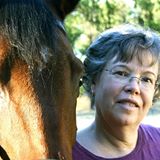 Kathleen Gilman grew up in Redding, spending much of her time in her backyard among the oaks and manzanitas. She attended a few different universities in California, earning a Bachelors in Zoology and Masters in Conservation Biology, before moving back home to the oak woodlands. She worked at various natural science jobs before founding Shasta Land Trust in 1998, a non-profit organization dedicated to the conservation of open space, wildlife habitat, and agricultural lands in Shasta County. Now retired, a perfect day for her would include chatting on the phone with her daughter, then an afternoon horseback ride with her husband out in the woods, a small gathering with good friends in the evening, and later still curling up with a good book.


