

“An eye for an eye only ends up making the whole world blind.”
Mahatma Gandhi
In my previous column, I attempted to delineate the basic steps, the ping-pong volleys, if you will, of human conflict. Someone feels pain and expresses it in such a way that someone else feels pain. A rapid cycle of blame and defend ensues so quickly that neither party can recall it afterward. Hurt people hurt people and struggle to understand why.
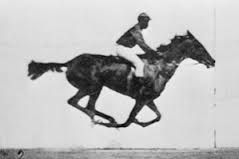
This process reminded me of Eadweard Muybridge, an English photographer who solved the riddle of horse locomotion by using multiple cameras to capture the animal in motion. Before 1872, it was not known whether all four feet of a horse were ever off the ground at the same time while trotting or galloping. The horse’s movements were too rapid for the human eye to follow.
Likewise, the back and forth of human conflict often careens and crashes too fast to capture and understand. Like a cloud of dust, emotions rise up to choke our rational minds and render us helpless to decipher what was said. We can’t see clearly enough to help us heal. Instead, we retreat to the safe sanctuary of our own private truth and continue to blindly damage our most valued connections.
It is more likely that I will behave logically and rationally in response to human behavior that I perceive has nothing to do with me. However, if I decide it’s about me, I will likely project a variety of unhelpful, untrue and invalid thoughts about it which will then likely trigger a variety of strong, “negative” emotions like fear, hurt, sadness, anger or revenge.
The more I personalize your behavior, the more I will think closed, rigid thoughts with me at the center. The more I personalize, the less I empathize. As I decrease my empathy, I lose touch with the humanity of others. I will come across as cold and uncaring to others.
The less I personalize, the more I can empathize. The more I empathize with others, the more I can react in a flexible manner to their behavior. As I increase my empathy and compassion, I see their perspective and point of view as equally valid to my own.
I might come to understand that other people’s behavior isn’t about me. It’s about them. I don’t have to take their words or actions personally. I have a choice. I can react with personalization, blame and defensiveness. I can get angry and lash out at them. Or I can react with empathy, compassion and understanding. I can take responsibility for my own pain without blaming others.
If I accept that I am responsible for the outcomes of my experience in the world, including my interactions with others, I realize it does no good to judge or blame. I am not responsible for what others do but I am responsible for how I think, feel and react to them. I am not to blame for what they think, feel or do. They are not to blame for what I think, feel or do.
Thinking blame or “should” thoughts is dangerous. When I think what others “should” think, feel or do, I am placing expectations on them. I am setting myself and others up for pain and disappointment.
I am responsible for me. You are responsible for you. If I am dissatisfied with how others behave, that is my problem, not theirs.
I cannot control others. I cannot change others. I can only control my attention and actions in the present moment. Blaming others does not work. It will never work. Judging and blaming self and other is a waste of time and energy. It is not effective. Blaming is pointless. It does not lead us anywhere positive. It feels good to blame, to take all our pain and assign it to someone else but it’s ineffective. It does not help us get what we truly need or want.
I know what I want. It is my job to get my needs met. I cannot blame someone else when my needs are not met. That is my responsibility, not theirs. If I am in pain, it is my responsibility to figure out why and how to relieve it. It does no good to blame others for my suffering.
If I am not getting what I want or need from others, that is my problem, not theirs. Each of us normally acts in what we perceive to be our best interest. People “should” behave exactly as they are behaving at the present moment because that is how they are behaving. Our argument with this reality is the problem, not reality. “Shoulding” reality is the process of looking at self or other and mentally resisting it. Reality remains. And meanwhile, here we are engaging in pointless resistance. We think reality should be different. How does thinking that help? Who gets hurt when we go to war against what is?
We have a choice to accept reality as it is or resist it. When we refuse to accept reality as it is and we are unable to change it, we will suffer. We can bang our head on a brick wall but the brick wall remains. The fact the wall exists is not a personal attack on us. We experience it through our personhood but it is not personal. It is not about us.
Right here and now we are free to focus our attention as we see it. We are completely free to control our actions. That is the limit of our freedom and control. We cannot control the past, the future or other people. It is helpful when our thoughts about the past, the future and other people conform to reality but we are free to resist or argue with what is. We can accept what we can never change or we can refuse. Which choice is effective? Which one works?
Accepting reality is not approval. It is not agreement about what reality “should” be. It is simply the non-judgmental acknowledgement of what is real or true here and now. Reality is not the problem. Resistance is the source of pain. When we give up the war,tremendous peace and relief can flow in.
When we give up controlling what we cannot control, we can focus our energies into more productive pursuits.
Our first goal is simply to remain calm. When we are upset or agitated, our interactions with others are likely to be non-productive and harmful. So first we call a time-out if necessary to collect our thoughts and emotions.
As we calm and relax, we can mindfully observe and defuse from our thoughts. We can accept and allow our emotions to be what they are as we connect with the present moment and the appropriate values and actions that arise from a desire for mutual benefit.
In our interactions with others, we can practice non-defensive speaking and listening, empathy, compassion, understanding, affirmation and validation. We can give what we want to receive. We can ask for what we need. We can seek to meet the needs of others.
None of this is easy of course. But if we want loving relations with others, we have the power to create them. Many times, by seeking to understand before being understood, our partner feels naturally motivated to respond in the same spirit. Trust builds trust. Faith builds faith.
Mindful relationships are not perfect. We are all flawed people seeking to form relations with other flawed people. We won’t always get it right. We will make mistakes. We will try to build relationships based on these principles and fail. And that is ok. Perfect success forever is not a realistic goal. Being authentic. Being real. Being honest. Continual effort. Keeping at it. That is what’s important.
At this moment only our thoughts divide us from who we think we are from who we wish to be. The connections we seek are not far. We are all hurting. And we are all looking to someone near us to care and help us heal. It is hard to ask for what we need. It is hard to offer a healing hand. It is hard to make this stuff work. And yet it’s why we’re here. To keep trying. To keep loving. To keep giving. We all need the piece of precious peace our unique presence brings to the big puzzle of us. Thank you for not giving up. Thank you for you.


