

“Things happen. That’s all they ever do.”
Taylor Goldsmith
“Toward the end of his life, the Buddha took his disciples to a quiet pond for instruction. As they had done so many times before, the Buddha’s followers sat in a small circle around him, and waited for the teaching.
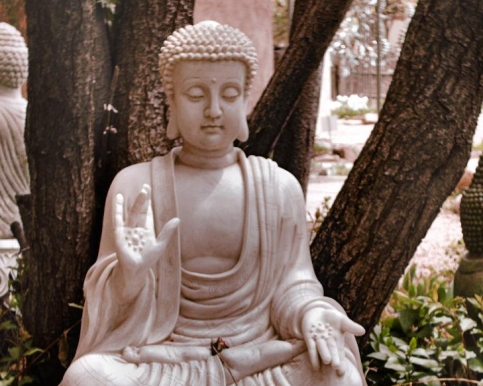
“But this time the Buddha had no words. He reached into the muck and pulled up a lotus flower. And he held it silently before them, its roots dripping mud and water.
“The disciples were greatly confused. Buddha quietly displayed the lotus to each of them. In turn, the disciples did their best to expound upon the meaning of the flower: what it symbolized, and how it fit into the body of Buddha’s teaching.
“When at last the Buddha came to his follower Mahakasyapa, the disciple suddenly understood. He smiled and began to laugh. Buddha handed the lotus to Mahakasyapa and began to speak.
“‘What can be said I have said to you,’ smiled the Buddha, ‘and what cannot be said, I have given to Mahakashyapa.’
“Mahakashyapa became Buddha’s successor from that day forward.”
I first grasped my “window nature” when I was around 16 or so. In those days it was Neil Young or Cat Stevens who held up the mirror of music that showed me me. We did not have mp3 players in the early 1970s, although I imagined such a miracle. Instead, we had our small collections of albums that we played endlessly on our portable record players or if we were more fortunate, our “sound systems,” complete with receiver, speakers and eventually a cassette recorder that enabled us to copy and play our albums in our cars.
I spent hours in my closed room listening to After the Gold Rush, Harvest, Tea for the Tillerman and Teaser and the Firecat. The music would flow into my spirit and I would feel it shimmer and shake and then become peaceful and quiet and some words would line up like parachutists ready to leap from a high plane and all I had to do was put my pen to paper and they would tumble out. I just watched. I was a window through which the words passed. I had no clue where they came from but it got me high. Better than any drug.
Even then, I struggled with improving on silence. How could something be better than nothing? Once we gain a spiritual understanding, don’t we ruin it the minute we try to describe it? The best we can accomplish with words is to imperfectly fashion a sign that points to something too amazing for words.
The reason I fell in love with Zen Buddhism at that time was its recognition of the vacancy of language. It is necessary to fill up the space between us. But even if our words speak the truth, they aren’t the same as experiencing truth in our being like warm blood surging through the rivers of our veins. Talking about sex or sugar is the not the same as tasting them.
We can only fully grasp the truth of something when we go beyond thoughts and words. Which, for someone like me who loves words like an addict loves heroin, has been a difficult reality to accept. A canoe is useful for getting across the river but once we reach land, we leave the canoe behind.
We can’t improve on the perfection of the natural world but when stop swimming in the word stream, we can wake up and see it. And be it.
“The Buddha was teaching about the essential nature of reality,” an essence that is in you and me and everyone and everything. It cannot be captured in words. And yet it is here. It is now.
Adyashanti explains in Falling into Grace: Insights on the end of suffering that we can’t truly understand our suffering unless we turn inward and see how we see. Our thoughts are the silent words in our minds that are not real but point to what is real. When I look at a picture of me when I was 16, I know that guy is gone. I know the picture is not him and my thoughts about him are not him. My thoughts about something are not the same as the thing. My thoughts about Buddha’s flower are not the same as the flower. None of our thoughts are real and yet we cling to them like a life-boat in a stormy sea.
Adyashanti states that from a young age, “we’re taught that we are what we think about ourselves.” And not just what we think. We also believe that “we are what others think about us” or what we imagine they think about us. To most of us, thoughts are real things.
And yet they are as substantial as a flickering scene of a butterfly’s wing on a movie screen.
What do we do when someone does not like us? What do we do when they say unkind things to us or about us? Is that who we are? Are we the person our friends think we are? Or are we the person our enemies think we are? Who is right? What is true? What is real? Who decides who we are? Which thought in which mind contains our truth?
Adyashanti suggests we separate the movement of the mind from the awareness of the mind. The movement of the mind is like what happens on the stage of a play. It isn’t real. We buy our tickets for the show but we know it isn’t real. It is our awareness of the truth that allows us to separate what is real from what isn’t but most of us confuse the “play of the mind,” the movement of mind-stuff, with what it stands for or symbolizes, the real self behind the mask.
I have worked with psychotic patients in hospitals who suffered from delusions or false beliefs. I remember one in particular. He could “see” a floating screen off to his right and up toward the ceiling on which the CIA would communicate with him on a continual basis through an implant they had placed inside his head. I could not convince him the screen was not there or that he was mentally ill. He believed his own mind.
Each of us lives in a kind of trance. Over our lifetime, we have crafted our sense of self or ego, which “is nothing more than the beliefs, ideas, and images we have of ourselves.” It includes the various roles we play that we have imagined for ourselves. And part of the trance, of course, is that we fail to see we are dreaming.
The key feature of our sense of self is our separation from or conflict with others. We think we are better or we think we are worse or some of us believe both thoughts are true. Our sense of self is always in resistance to something or someone. Our separate identity requires this “self against other” or “I am different” quality to maintain its illusory existence.
I am thinking of one of my clients right now. Even the word “client” is misleading, a label that could distract us from the truth. Let me instead state that in my practice, I sit with fellow travelers who are struggling to wake up from their trance. In their dream, they are in pain and they are fighting so hard against their depression or anxiety, they become exhausted. I am one of their life-lines and they imagine that I have words that will help them heal. Meanwhile, the thoughts in their head keep coming, streaming out like a fire hose; spewing dark, angry messages that persuade them it is hopeless. They fill up with so much despair, it threatens to choke them.
What happens when we realize our thoughts aren’t real? Not true? What happens when we stop resisting and begin relaxing and accepting? What happens when we sit in the audience and watch the show go by? What happens when we decide it is time to wake up? What happens when we become completely willing to have all this? How does it feel to embrace our suffering instead of fleeing from it and going unconscious again?
What happens when we wake up and realize “nothing really needs to change”?
“You don’t need to struggle against yourself. Just the opposite. All you need is the willingness to question your mind’s conclusions, the willingness to just relax. Instead of trying to change now, just let now be as it is, even though your mind may have plenty of reasons why you should resist it. Try it anyway.”
When Buddha held up the flower, he simply said without any words “Here IT is.” And once you see IT here, you see IT everywhere. And then you too will laugh.


