

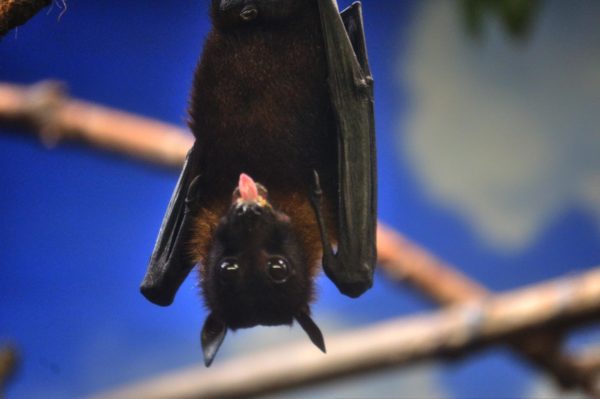
Three bats found in Shasta County have tested positive for rabies so far in 2026, prompting the Shasta County Health and Human Services Agency (HHSA) to remind residents to vaccinate pets and share tips for staying safe when encountering bats.
Rabies is a serious and fatal disease that can infect mammals, including humans, dogs and cats.
Rabies is present in all California counties, and peaks in summer months. The state’s county health departments have noted an increase in human exposure to wildlife, including bats. These exposures result in more rabies testing and more positive findings in animals. Shasta County’s three positive bat tests follow this trend. In 2025, the county recorded two positive rabies tests in bats and no positive rabid animal tests in 2024.
Although most bats do not carry rabies, it is important to avoid direct contact with bats and other wild animals to protect yourself, your family and your pets. If a bat may have bitten a person or pet, testing that bat for rabies can save lives. If it is safe to do so, wear heavy gloves and use a box or bucket to capture a dead or potentially sick bat. Never touch a bat with bare hands.
Rabies is an infectious viral disease, generally transmitted by being bitten or scratched by the tooth of an animal that has rabies. Any wild mammal (such as a raccoon, skunk, fox, coyote or bat) can have rabies and transmit it to people.
Though only a small percentage of bats carry rabies, the risk of exposure is higher when bats exhibit unusual behavior, such as flying during the day, being found on the ground, or resting in visible areas. The only way to tell if a bat has rabies is by having it tested.
Call your local animal regulation service to report potential exposures, to remove a bat, and for rabies testing of a bat, if it can be safely contained:
- Sheriff’s Office Animal Regulation (outside city limits): (530) 245-6065
- City of Redding & Anderson Animal Regulation: (530) 241-2550
- Shasta Lake Animal Regulation: (530) 275-7480
For health guidance, call Shasta County HHSA’s Public Health office: (530) 225-5591.
Key Information
- Rabid bats may or may not appear sick.
- Rabies is transmitted through the saliva of an infected animal, most commonly through bites or scratches from the tooth.
- Bat bites and bat tooth scratches can go unnoticed, since they are typically small and difficult to detect.
- Rabies is a fatal disease for both humans and pets, including dogs and cats, without immediate medical treatment after a rabies exposure.
- Never touch a bat with bare hands.
- Teach children not to handle unfamiliar animals, even if they seem friendly. “Love your own, leave other animals alone” is a good principle for children to learn.
- Make sure pets are current on rabies vaccinations.
- If outdoors with pets, keep your animals on a leash. Do not let them interact with any wild or unknown animals outdoors.
What to Do If You Find a Bat
Remember, bats are protected wildlife. It is illegal to harm or keep a bat.
- Do not handle bats or any wildlife with bare hands.
- If you find a sick or dead bat outdoors, and the bat may have bitten or tooth-scratched a person or pet, cover the bat with a box or bucket and contact the animal regulations service for your area. Regulations staff will arrange to have the bat tested.
- Simply finding a dead bat outdoors does not require any action if there was no bat bite or bat tooth-scratch.
- If a bat is found indoors, do not release it. If it is safe to do so, place a bucket or box over the bat. Contact the animal regulations service for your area to make a report and have the bat tested. When there is potential exposure to rabies, testing the bat is important and may save lives.
- Immediately report all potential exposures to bats and animal bites to your local animal regulations service.
- Seek immediate medical care if exposed to or bitten by a bat to determine if post-exposure treatment is needed. Rabies almost always leads to death if not treated before symptoms start.
For guidance on safe bat capture, visit HHSA’s Rabies and Bat Safety webpage.
For more information, please visit:
Rabies and Bat Safety, on HHSA’s website


