
Editor’s note: This story was updated with new information at 9:15 a.m. on July 27, 2024.
###
The same day that much of the North State came under attack by the Park Fire, and thousands of residents evacuated and fled the fire in search of shelter and safety, freedom of the press came under fire in Shasta County with stringent rules authorized by Shasta County’s board majority, the CEO and county counsel.
While there were no press releases from the county pertaining to the Park Fire, the county’s lone press release of the day pertained to rigid new restrictions upon members of the media.
The county press release stated that members of the press who plan to attend and report on future Shasta County Board of Supervisors meetings will now have their movements and access to the board chambers restricted.
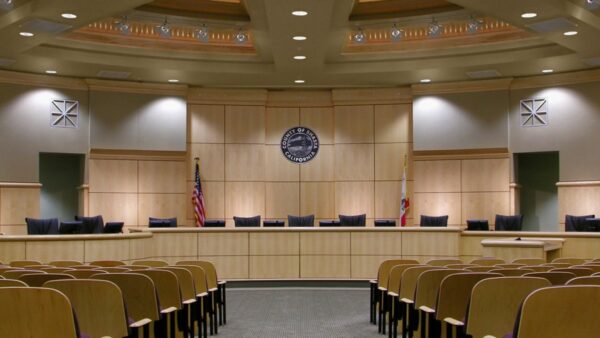
According to a new county policy, announced in a 4:55 p.m. Friday press release, all media and their equipment will be corralled together inside a small room at the board chambers’ far back corner, where they will be allowed to observe through one large window.
Traditionally, this space is occupied by various county employees and IT personnel during supervisor meetings.
This new policy, effective immediately, was announced in a press release emailed by the county’s media contact, Stewart Buettell, Deputy CEO. It was released to some media.
Although A News Cafe routinely receives county press releases about everything from public safety to board agendas, A News Cafe did not receive this particular press release, but learned of it on social media. A News Cafe emailed Buettell after hours to ask about the missing press release. Buettel replied in an email that A News Cafe was unintentionally omitted from the emailed announcement. He immediately sent the press release regarding media-access restrictions to A News Cafe.
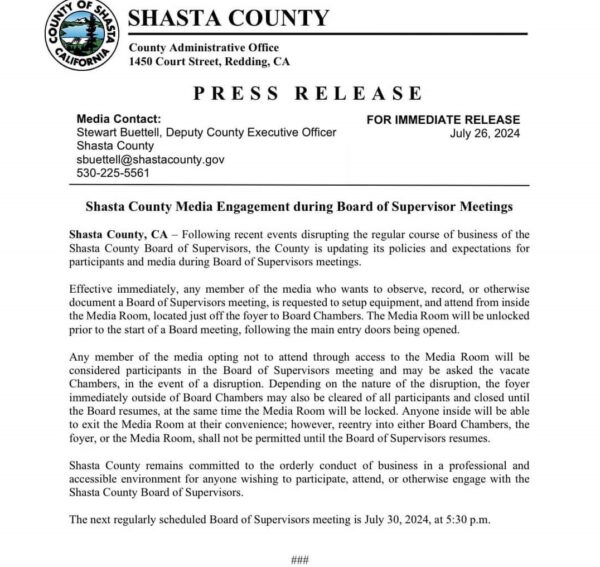
Here is the press release’s full text:
Shasta County Media Engagement during Board of Supervisors Meetings
Shasta County, CA — Following *recent events disrupting the regular course of business of the Shasta County Board of Supervisors, the County is updating its policies and expectations for participants and media during Board of Supervisors meetings.
Effective immediately, any member of the media who wants to observe, record, or otherwise document a Board of Supervisors meeting, is requested to setup equipment, and attend from inside the Media Room, located just off the foyer to Board Chambers. The Media Room will be unlocked prior to the start of a Board meeting, following the main entry doors being opened.
Any member of the media opting to not attend through access to the Media Room will be considered participants in the Board of Supervisors meeting and may be asked the (sic) vacate Chambers, in the event of a disruption. Depending upon the nature of the disruption, the foyer immediately outside of the Board Chambers may also be cleared of all participants and closed until the Board resumes, at the same time the Media Room will be locked. Anyone inside will be able to exit the Media Room at their convenience, however, reentry into either Board Chambers, the foyer, or the Media Room, shall not be permitted until the Board of Supervisors resumes.
Shasta County remains committed to the orderly conduct of business in a professional and accessible environment for anyone wishing to participate, attend, or otherwise engage with the Shasta County Board of Supervisors.
The next regularly scheduled Board of Supervisors meeting is (Tuesday) July 30, 2024, at 5:30 p.m.”
###
Board minority rejects board chair’s ‘media room’ idea
-
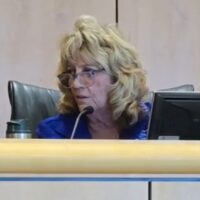
- District 3 Supervisor Mary Rickert.
-
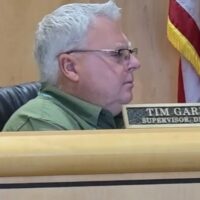
- District 2 Supervisor Tim Garman.
District 3 Supervisor Mary Rickert and District 2 Supervisor Tim Garman shared the following respective statements with A News Cafe regarding the implementation of the county’s new policy that limits media members’ access to the board chambers.
Editor’s Note: A News Cafe did not initially reach out for comment to District 1 Supervisor/Chair Kevin Crye, District 4 Supervisor Patrick Jones and District 5 Supervisor Chris Kelstrom because none of the three supervisors ever respond to ANC’s requests for comment.
However, Saturday morning A News Cafe requested via email comment from supervisors Crye, Kelstrom and Jones regarding the media restrictions press release. This story will be updated if any of those supervisors do respond.

District 3 Supervisor Mary Rickert.
District 3 Supervisor Mary Rickert: “I am not in agreement with this decision made by Chair Crye. The media should be allowed to do their job and report on news items as they were able to do during raucous board meetings in 2020 and beyond. There is a such thing as freedom of the press.”
District 2 Supervisor Tim Garman.
Shasta County District 2 Supervisor Tim Garman: “Shasta County continues down the path of dictatorship. When you restrict the media from covering the news, you have essentially created a dictatorship and can control the media.
I assume that every media will be challenging this as the media has the right to cover the news wherever the news is happening.
Dictatorship is a form of government in which one person or a small group possesses absolute power without effective constitutional limitations.
We see this is happening right in front of our eyes.”
Award-winning journalism professor weighs in
Dave Waddell photo courtesy of USC
Center for Health Journalism.

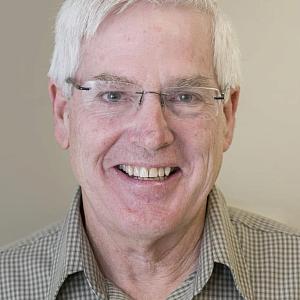
A News Cafe reached out to Dave Waddell, professor emeritas of journalism at CSU, Chico.
Waddell earned a degree in journalism from Fresno State University, a bachelor’s in English from Chico State, and a Ph.D. in education from
Capella University.
He spent 20 years as newspaper reporter and editor, including at the Redding Record Searchlight.
In 1996 he became the journalism advisor for Chico State’s award-winning newspaper, The Orion. Under Waddell’s guidance, The Orion earned more than 50 major awards regionally and nationally. It’s been named the state’s best university newspaper 11 times by the California Newspaper Publishers Association.
Here’s what Waddell had to say about the press release:
“I’m no expert on the laws of public meetings, but I question the legality of locking the press out of the board room where the county’s decisions are being made. The news media should have the same access to the board chambers as other citizens. They should not be corralled separately.
This seems like an effort by politicians to try to control what the public is able to find out about their decisions and the public’s response to those decisions. Such a strategy is not only anti-democratic, but quite stupid from a public relations standpoint.”
No Gray area regarding the Brown Act’s take on disruptions during meetings
County Counsel Joseph Larmour and County CEO David Rickert attend a Shasta County Board of Supervisors meeting.
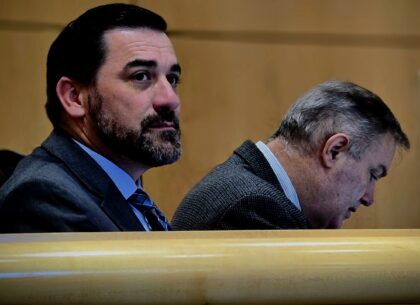
Although the press release doesn’t identify the author of the new policy to restrict media access to Board of Supervisors meetings, the public can discern the framers of these new media constraints through the process of elimination.
Supervisors Mary Rickert and Tim Garman have already spoken out strongly against the new policy.
According to county insiders, Supervisor Crye, who’s the board chair, is the primary force behind this change.
District 1 Supervisor Chair Kevin Crye
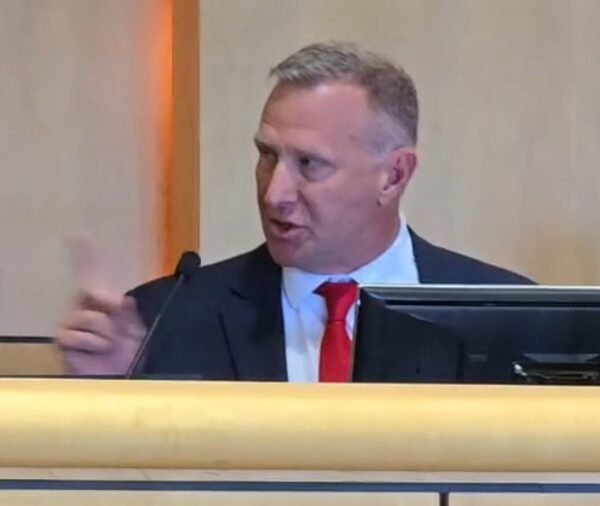
Complicit in this “update” of the county’s policies and expectations for the general public and the press during board meetings are County Counsel Joseph Larmour and CEO David Rickert.
The Brown Act is specific about public access, and meeting closures due to disruptions.
Here’s what one California Attorney General explainer on the Act says about disruptions:
“ Despite the public’s rights to attend meetings … a legislative body may exclude all persons who willfully cause a disruption of a meeting so that it cannot be conducted in an orderly fashion. Where removal of the disruptive persons is not sufficient to restore order, the body may clear the room of all persons. (§ 54957.9.) However, in such situations, media personnel not involved in the disturbance must be permitted to attend the session as continued. (§ 54957.9.)”The 54957.9 section is clear. If the media member is not part of the disturbance, (s)he can’t be removed. Nor can others who are not causing the problem.