
Photo from Tehamacountywater.org
Want to know a secret? You may already know, but it was news to me. I’ve been having knee pain going down stairs and mountains. Going up is fine. Down, ouch. A day of running up and down the stairs at Alger Vineyards could reduce me to tears. Coming down Brokeoff Mountain – yikes. Ibuprofen and acetaminophen didn’t help. CBD helped, but not 100%.
We had New Year’s cocktails with newish Manton folks Bob and Pati Nolen – she is running against Dennis Garton for District 3 Supervisor – and they mentioned in passing that alfalfa had cured their knee pain. What? Alfalfa? The Little Rascal? Sprouts? Do we just grab a bale at Reynolds and start chewing?
Apparently there are supplements – who knew? I ordered 500 tablets on Amazon for around $15 and started taking three every morning around January 6 or so. Three weeks later, I got to try them out on Alger’s stairs. It was super busy but there wasn’t even a twinge of pain all weekend.
Then Mr. Standish and I did a little 8 mile hike to 5 Bills Cemetery here in Manton. Steady uphill all the way there, steady downhill all the way back. Zero knee pain.
I am not a doctor and am not making medical claims, but they appear to be working for me. There are other nutritional benefits, too, so do your own googling. I’d love to hear if it helps you, too.
And speaking of alfalfa, did you know it’s a major water guzzler in California? Most of it is grown down south and depending on which source you quote, 20% of it is exported to Asia to feed livestock there. Unfortunately, alfalfa isn’t as profitable as almonds, so many farmers are replacing their lush green fields with orchards. Neither are anywhere near as profitable as cannabis, which uses a lot less water – just sayin’.
Almonds have recently overtaken alfalfa as the state’s biggest water chugger and even local alfalfa fields have turned into nut orchards – I’m looking at you, outer Antelope Blvd. Donny One Ball will be munching on exotic imported Oregon hay this summer. Heck – in another month. That’s gonna cost us.

A lot of column inches have been devoted to our water issues lately, and this week is no different. The Groundwater Sustainability Commission presented their ordinance to the board of supervisors on March 1. It did zip zero nada to protect domestic well users this year.
The supes had several options, and eventually they voted to send it back to the GSC to work on some more. There was no board created ad hoc, which could have included members of the public, but all hope is not lost. Since the foxes are guarding the henhouse, waterwise, do not expect any help from them. The board, however, can create their own ordinance at any time.
When people start showing up at meetings this spring to complain about their dry wells, the board can adopt an Emergency Ordinance and ban all ag well drilling temporarily. They should probably get it written now to adopt when needed, but proactivity isn’t their strong suit.
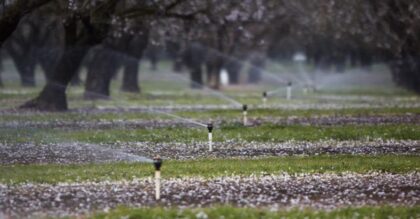
And even that will just be a Band-Aid. The conversation should involve metering water use and shallow monitoring wells so domestic users will have some warning when their aquifer is getting low and they can go to their neighbor’s orchard and wash their clothes in the drip lines or sprinklers.
As reported recently, Tehama County has no idea how many wells there are nor what size they might be. According to the presentation by Justin Jenson of Public Works, more than half of all wells have no data at all.
Of known wells, the diameters of more than half are unknown. Of the others, approximately 40% are 6”-12” in diameter and 45% are 12”-18”. Wow.
Aside from wells so old there were no permits required, why don’t they know how many or the sizes? Are there boxes of paper in the basement of the Old Courthouse that nobody wants to go through because of mouse poop?
No matter, the proposed plan is to set up a registration system and you get to pay for it. 29 cents per acre, no matter where you live or whether or not you have a well. It will be added to your next tax bill if passed by the supes. Because of crappy record keeping. They sure had my bill ready quick for our $3,000 cannabis abatement fine. But well permits? Hmmm…not sure where we left those.
Will people step up and register their wells? Who knows? Annual fees will be assessed on the number and sizes of wells on every parcel. People who don’t register will get an “assumptive fee” on their tax bill. Will they then have to prove they don’t have a well? How? Field inspection? Hah – that’ll be fun.
Aquifers don’t pay attention to man made boundaries. The Corning Sub Basin extends into Glenn County. Last year, Glenn County’s Board of Supervisors unanimously adopted a 45-day county-wide moratorium on drilling ag wells when residents’ domestic wells were going dry. Tehama County’s Board of Supervisors punted on a more lenient moratorium until the ag-heavy commission could submit their ordinance, which now “needs more work”. Kicking the can down the road.
Remember that come the June primary. There may already be dry wells showing up by then. Matt Hansen – who is running against Bob Williams for the District 4 supe seat – is working hard to help and protect domestic well users. Tell your friends in Corning, Rancho Tehama, Flournoy, Henleyville, and Paskenta. Time for the water-challenged folks to get proactive. Don’t wait until you turn on the faucet and dust comes out. Speak up now. Same goes for you, Antelope folks.
I’ll be watching Spanky and Stymie escape from Reform School.
 Liz Merry was born in Brooklyn, raised in the Bronx, then transplanted to the Jersey Shore. She moved to Chico in 1984 and married her comedy partner, Aaron Standish, in 1990. They have lived in Manton since 1994.


