

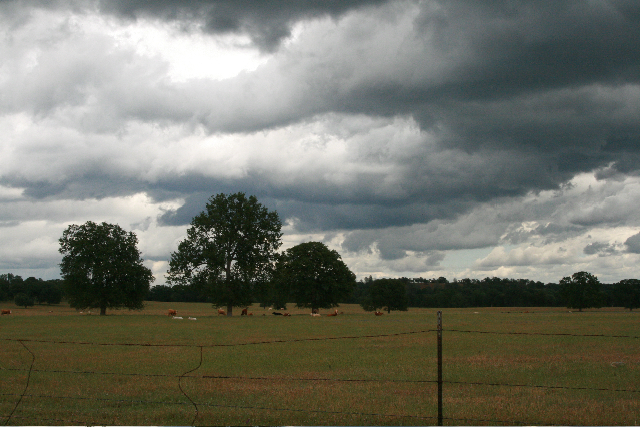
 June in the North State Garden covers just about everything that gardening is: shade trees are shading; shrubs, herbaceous perennials and summer flowering bulbs are blooming their hearts out; vegetables and fruit crops are starting to come in; watering, weeding and dead-heading are constant chores; the compost pile gets additions every day, and daily turning reveals a steamy active pile, cooking along. Photo: A cloudy late-May sky in the Happy Valley.
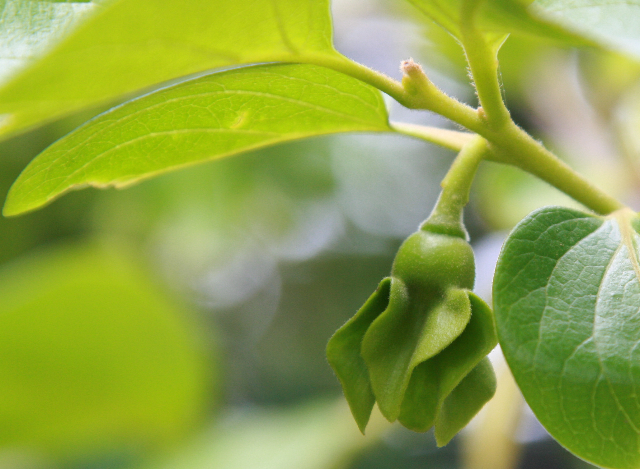 Fruit has set on my blueberries, huckleberries, Santa Rosa Plum, Pink Lady Apple, Hachiya Persimmon, Moro Blood Orange, Meyer lemon and Kafir Lime. My grape vines and my Brown Turkey fig have not set fruit but as they were each planted just last year, I am guessing they are not yet mature enough to produce. I have had a little fruit drop on my Lady Apple and my persimmon and while there could be pests or diseases causing this drop, after careful scrutiny at leaf and bark health, I think it is normal early summer fruit drop which is the trees’ natural thinning of its crop in order to best sustain the fruit it does carry to harvest. My Angel Red Pomegranate is just now blooming and the unwhorling red tubular flowers are lovely. These flowers are almost as remarkable as a persimmon bud, bloom and fruit-set, which remind me of delicate jewelry. Photo: The whorl of the sepals around what will become a persimmon flower bud.
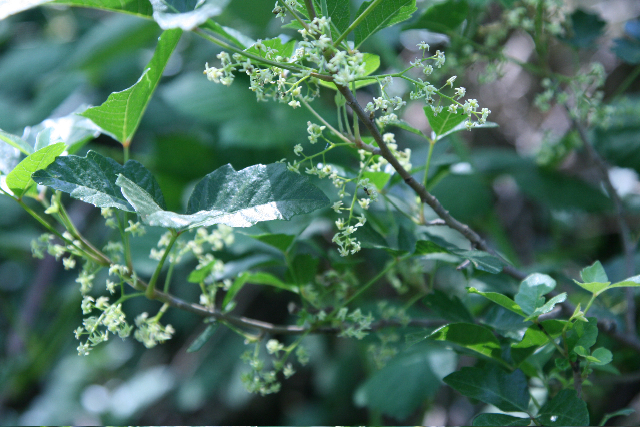 Just like this same time last year, I am suffering from a contact dermatitis, could be poison oak, that reminds me: Gardening is a full contact sport – not for the faint of heart. Bugs, snakes, sun, cold, damp and rash inducing foliage and even pollen might sometimes seem to be obstacles in the way of our passion (obsession). But there is little in the natural world that does not have its job and usefulness – it’s up to me to stay out of its way, which for someone like me who is highly allergic is easier said than done. Here’s what I wrote last year in the June Calendar about learning to identify (and perhaps to appreciate) Poison Oak. Photo: The spring flowers on Poison Oak.
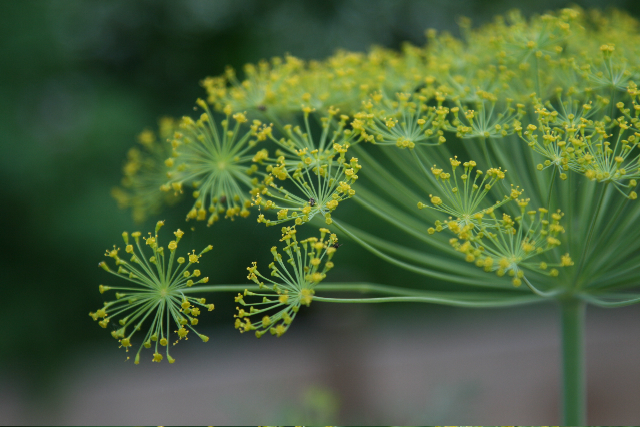 Poison oak’s botanical name is Toxicodendrun diversilobum. Although it used to be considered a member of the Rhus genus, Toxicodendron is now its own genus and consists of woody trees, shrubs and vines in the Anacardiaceae or Sumac Family and that produce the skin-irritating oil urushiol, which causes the rash – also called contact dermatitis. Poison ivy and poison sumac are also members of this genus. Photo: Dill in bloom in the herb garden.
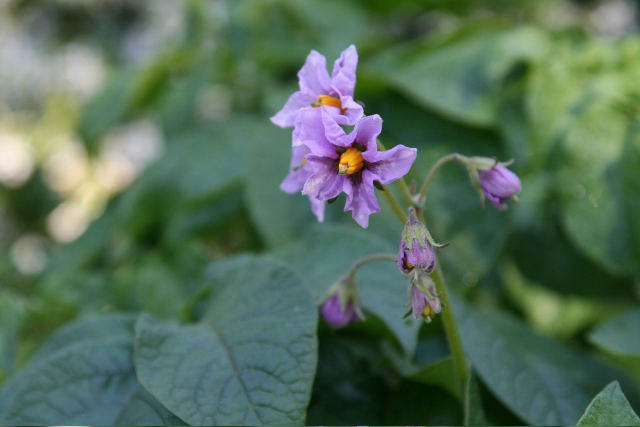 One of the tricky things about poison oak, ivy and sumac is how variable they are. The leaves may have smooth, toothed or lobed edges, and all three types of leaf edge may be present in a single plant. The plants grow as vines, shrubs, or small trees. While stems of Poison ivy and poison oaks usually have three leaflets, sometimes there are five, even seven. The common name poison oak comes from the leaves’ resemblance to the leaves of the white oak (Quercus alba). Photo above: a blue oak in early summer. All parts of the plant contain the irritating oil – the leaves, dormant stems, even the roots and the dried leaves. Poison oak is deciduous in the Northstate and one tell-tale identifier is the plant’s rusty-red new growth in early spring. Poison oak grows throughout the Northstate’s foothills and valleys, and while some people are less susceptible, most people will develop the rash if they come in direct contact with the oil. Some say that you can develop immunity, other’s say that you can lose resistance or immunity with repeated exposure. The native people of the Northstate are thought to have eaten the berries of the plant in order to build immunity. Photo: Potato flowers in the vegetable garden.
While irritating to me, poison oak is actually a valuable native habitat plant. It is protected and/or propagated for use in habitat restoration projects because it holds its fruit all winter, providing food for migrating or over-wintering birds and other wildlife.
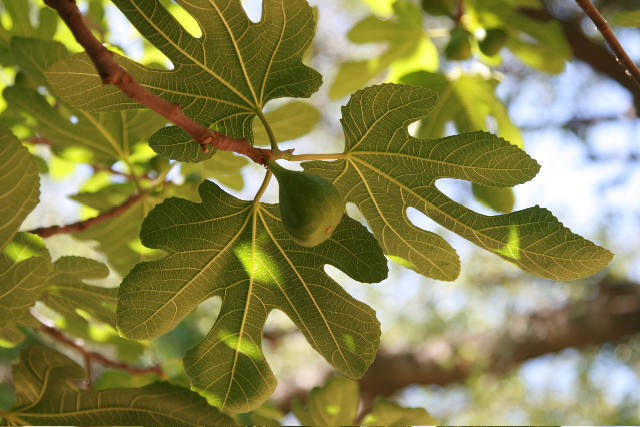 Most gardeners are not by nature prone to dwelling on the things they don’t love. Despite poison oak and the steroid shot I got in my fanny to unseal my swollen left eye, I love the garden in June. I love the soft light of early morning when the day is cool and fresh. The roses, lavender, salad greens, strawberries and cherries seem iridescent. I love the chirping call of the quail and the crazy way they scatter when I come upon them. I love the way the California Buckeye (Aesculus californica) holds its luminous white blooms like candles in the woodland edges. I love the way the open meadows and grasslands turn their summer wheat color. Growing up in the west – this is the color of summer. I love taking the day’s eggshells, strawberry greens, carrot scrapings, and coffee grinds to the compost pile. I love the silent flitting of the little bats in the early evening as they gather their fill of insects. Photo: Fig in Fruit.
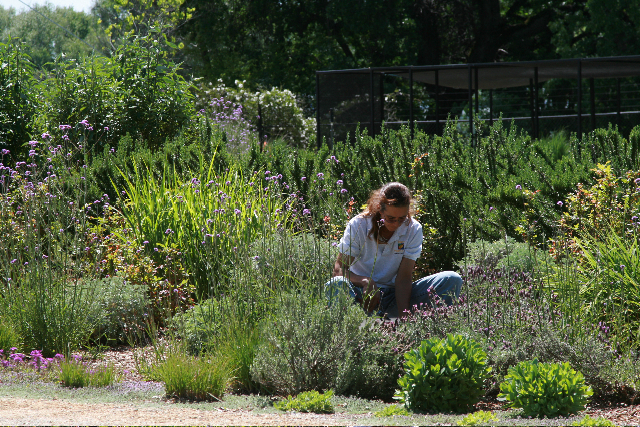 Now is a good time to keep planting your next succession of the vegetables you like most – such as annual herbs, lettuces, carrots, beets – and to begin thinking about what crops you’d like to put in for fall and winter harvest. It is also the right time to think about placing your Spring-blooming bulb order – most bulb suppliers offer substantial savings on orders placed before July 1. Photo: A Gardener at the McConnell Arboretum and Gardens at Turtle Bay in Redding diligently weeding and dead-heading.
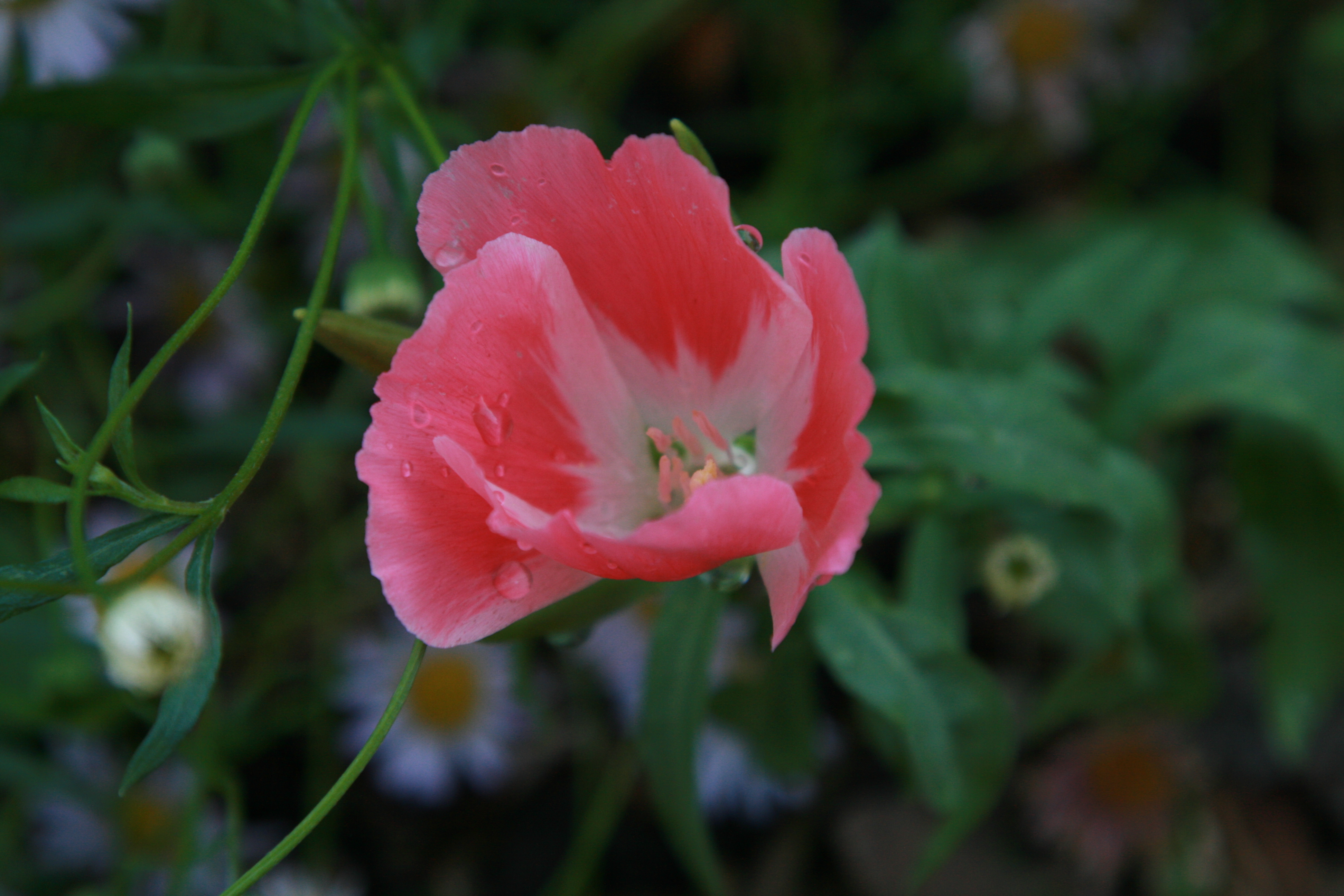 In sync with all the activity in the garden this month, many many good gardening events will take place in the North State in June. Several good garden tours will be held the first two weekends of the month: The Paradise Garden Club has their annual tour on June 6th and 7th, the Shasta Lake Garden Tour and High-Tea is June 7th, and The 1st Annual Butte Creek Garden Tour will be the 13th and 14th; following up on last week’s segment, internationally renowned plant hunter Dan Hinkley will be speaking about good perennial introductions for our gardens at High Hand Nursery in Loomis on June 13th and 14th. In Whitmore on the 27th – Tuscan Heights Lavender Farm and Gardens is holding their 4th annual all-day lavender festival featuring lavender foods, drinks, crafts and plant sales. And, in Chico on June 27th, the Friends of the Chico Herbarium will be holding the first of a two-part series on Composting – from Beginning to the Advanced with Master Composter Ward Habriel. It seems only fitting the first official day of Summer falls in June – on the 21st. The full moon – known also as the Strawberry Moon – falls on June 7th. Photo: Native Clarkia in bloom in late May.
For even more regional gardening events in June and beyond visit the In a North State Garden Events Calendar. Have an event you would like to get listed? Send me an email: jennifer@jewellgarden.com. Until next week – enjoy June in your North State garden!
 In a North State Garden is a radio- and web-based outreach program of the Gateway Science Museum – Exploring the Natural History of the North State, based in Chico, CA. In a North State Garden celebrates the art, craft and science of home gardening in California’s North State region, and is conceived, written, photographed and hosted by Jennifer Jewell – all rights reserved jewellgarden.com. In A North State Garden airs on Northstate Public Radio KCHO/KFPR radio, Saturday mornings at 7:34 AM Pacific time and Sunday morning at 8:34 AM Pacific time. Podcasts of past shows are available here.


