

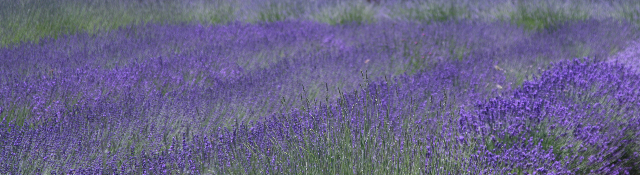
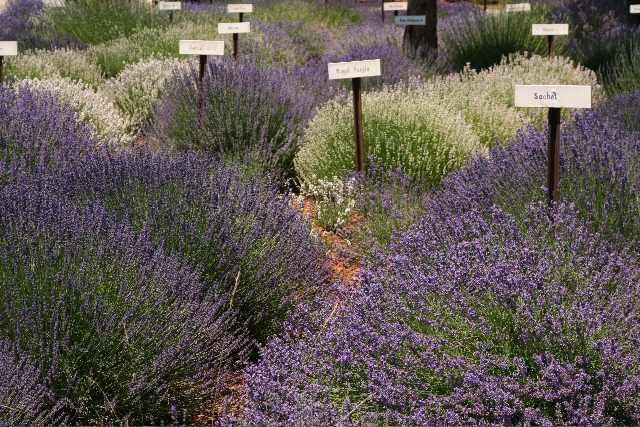
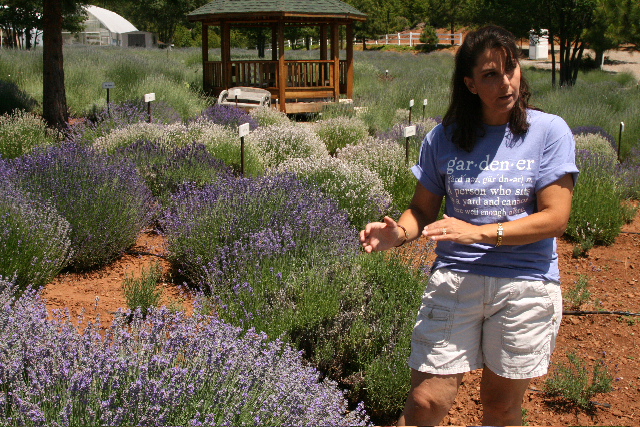
Lynette Gooch loves lavender. All kinds of lavender for all kinds of reasons. In the United Kingdom the gardening world has things known as National Collections, wherein when a specific garden has more species or varieties of any one kind of plant than any other garden, they can become designated a National Collection. Private gardens and gardeners are as likely to hold National Collections as larger public botanic gardens. In the United States, we do not have such a scheme, but if we did, Lynette Gooch and her husband Richard might well hold the National Collection of lavender with their 207 different named varieties of lavender at the display gardens in Whitmore: Tuscan Heights Lavender Gardens.
Grown as a culinary and medicinal herb throughout the world, throughout time, lavender (Lavandula) is a genus comprising multiple species and hybrids. Species of the genus originate from the Mediterranean, Africa and Asia.
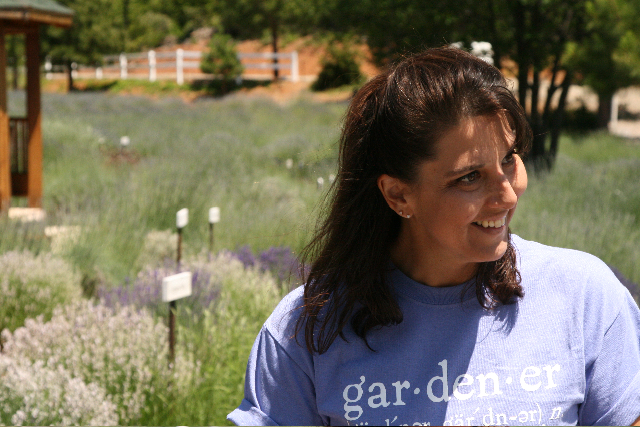
The Tuscan Heights’ story started in 1999 when Lynette and Richard, farmer/gardeners at heart, were looking around the North State with possible re-location in mind. Living in Roseville at the time, Lynette is from Calaveras County originally and of strong Italian descent, with fond memories of the large family production garden she grew up helping to tend with her father. “Of five kids, I seem to have been the most gardening inclined, which I think has helped me out here!” she tells me the warm summer day I toured around the gardens. “We were about to leave and head home when Richard by chance picked a local discount classified paper and happened to read about land in Whitmore. ‘Where’s Whitmore?’, he asked me. So we drove up, I got out of the car, looked around, breathed deeply, kicked at the dirt with my foot and said – This is it. Let’s write the check.” Although the sloping land was covered in poison oak, manzanita and blackberry, Lynette knew she was home. The Fern Fire had devastated the area 12 years earlier, and Lynette could see that the soil had begun to recover and was ready for any garden she might want to grow. Neither she, the land nor Richard knew just what that garden would become.
 After commuting the property to begin clearing on weekends, by 2002 the house they built on the land was almost done and Lynette decided to put in 25 lavender plants (Lavandula x intermedia ‘Provence’) at a corner of her house. Trouble was, the house is designed to nestle into the land and some of her original lavenders did not survive the first winter, which she later learned was due to poor drainage in that spot. She knew she loved the look and smell of lavender, and that she wanted to be able to grow them. As she began research on why a few of her plants died, she learned more and more about the genus – how to care for them, how many different species and varieties there were – and a passion was born. Lynette and Richard planted quite a lot more lavender in 2003 and the display gardens and nursery opened to the public in 2006.
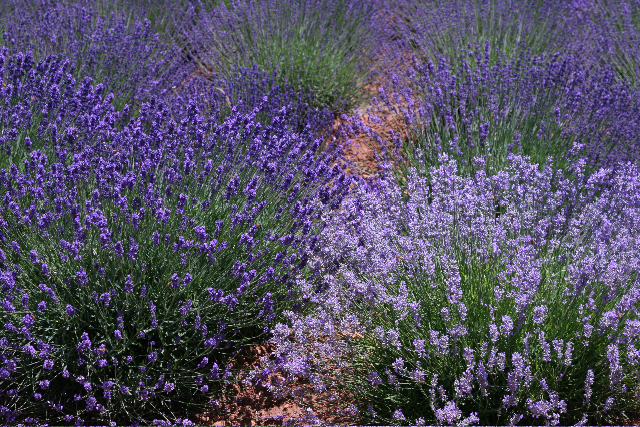 Now in 2009, on the brink of their 4th Annual full-day Lavender Festival on June 27th, Lynette and Richard, their 14 year old son Justin, and four part-time seasonal helpers tend the 4. 5 aces of 2500 lavender plants, the large culinary herb garden, and a scented geranium (Pelargonium) garden, as well as the additional and expanding acres planted in grapes. Richard took 6 of his Tuscan Heights wines – including a Lavender Pinot Grigio and a Lavender Blush Zinfandel – to the Shasta Fair and took ribbons with all of them.
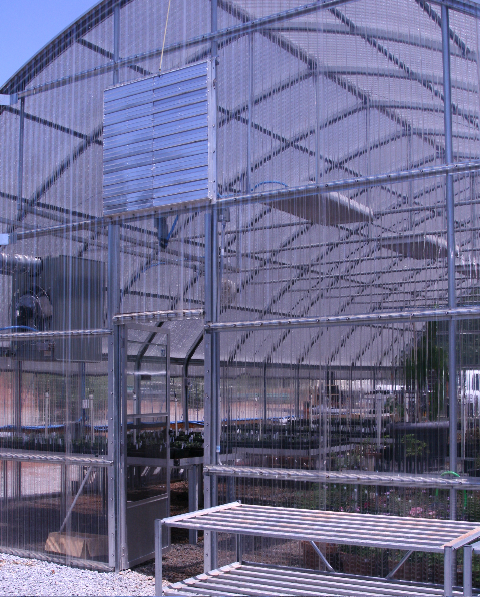 Besides selling lavender plant stock propagated on site and working on perhaps introducing a new named variety of Lavender (L. Miss Katherine’s Windtalker), Lynette has, over the past 5 years, developed and produced lines of bath and beauty products (including essential oils), culinary products and decorative products – all from the lavender grown and processed at Tuscan Heights. Further, “the lavender gardens, herb gardens, nursery plants, grape vineyards, steam distilled pure essential lavender oil and lavender floral water have all been: certified naturally grown, Shasta county registered organic and powered by solar energy.” The Tuscan Heights products are sold all over the country, in several places abroad and at the Tuscan Heights website.
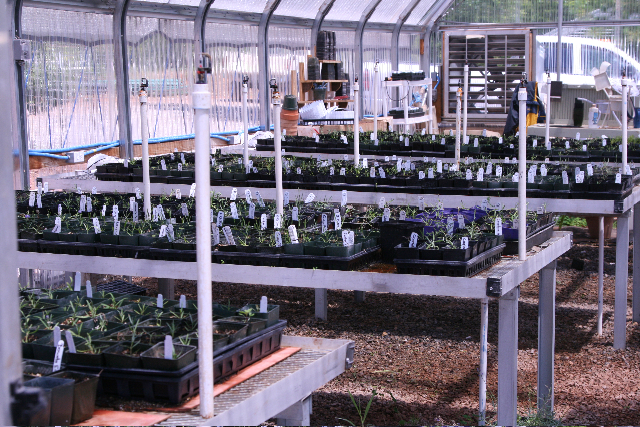 Lynette has gotten her importer’s license in order to help develop her collection even further and has plants from growers all over the world. She propagates her own plants as well from softwood spring cuttings taken off of her field grown plants, being careful not to propagate any plant that has plant patent in place. Between special orders, wholesale orders and plants taken to large shows such as the San Francisco Flower and Garden Show, Tuscan Heights regularly sells out of their popular varieties. You can place special orders for the plants that Lynette carries however and be put on the waiting list for next year.
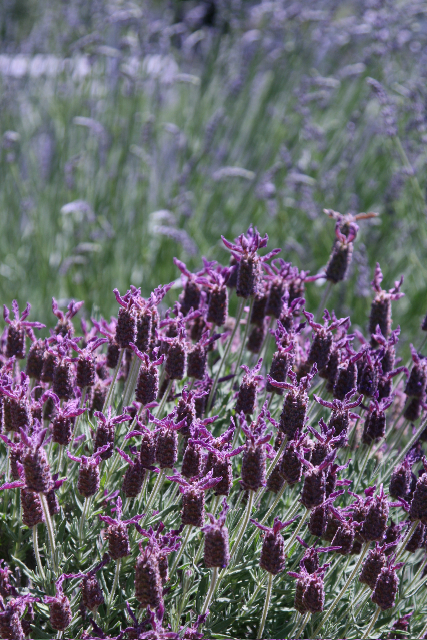 Tuscan Heights 207 lavender varieties, include an impressive selection of the so-called French varieties, primarily Lavandula stoechas and Lavandula pedunculata. The varieties of these species bear the tell-tale rabbit ear bracts sticking up from the top of the flower panicles, they are generally less hardy, but do fine at Tuscan Heights 2300 foot elevation, USDA zone 7 location. The stoechas and pedunculata lavenders were some of the earliest described, with medicinal references dating back to the Greek Dioscorides in 65 AD. The French lavenders open earlier than other groups and come in a wide range of color forms – from red to white to pink to all shades of purple.
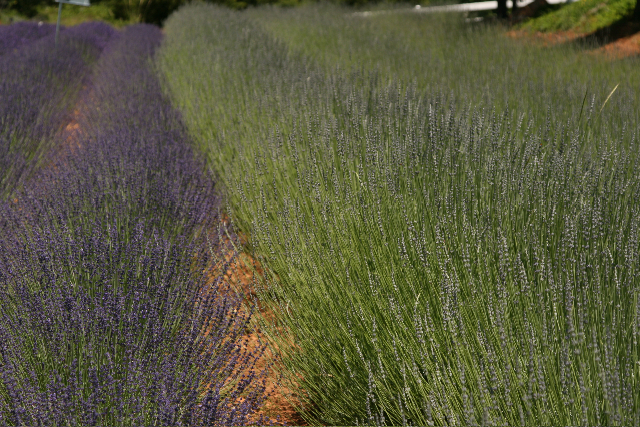 At Tuscan Heights, Lynette prunes all her lavenders back to the woody stems in late fall – after having done production harvests in early July and again in late September. Pruning and harvesting for the most part are done by hand to preserve the integrity of the blossoms and the shape of each plant. Known as woody sub-shrubs, lavenders can live up to 20 years in the right conditions with sharp drainage, hot dry summers (hey – we have those!) and not too much feeding. The rocky sandy loam and sloping grounds of Tuscan Heights seems ideal given the health and vigor of the plants. At Tuscan Heights the plants are deeply watered with drip irrigation up to every other day in the heat of the season from April – October. Besides careful pruning and weeding, Richard also adds organic fish emulsion to the waterlines 2 times a year – in spring when the plants are coming out of dormancy and again later in the summer. Lynette uses just about every bit of every one of her plants’ trimmings, from the flowers to the dry sticks left after the flower heads are removed for distillation, which are bundled and used as aromatic fire kindling or as fruit kebab skewers – “the aroma and flavor infuse the fruit as you grill it,” she tells me. Now that is a lavender lover.
 In part because Lynette loves them and in part because they make excellent companion plants to lavender, scented geraniums (Pelargonium) are another group of plants that Lynette grows extensively. She has a display garden of them and individual plants available for sale.
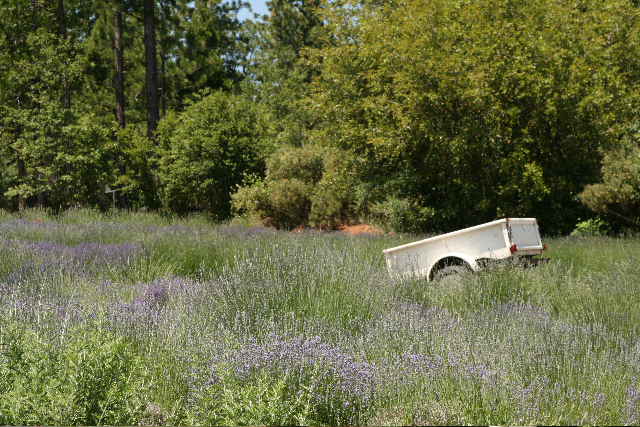
A good part of the fun of going to Tuscan Heights is to see the amazing range of lavenders available at all but more importantly that will perform superbly in the North State. Tuscan Heights has regular open hours for people to visit the display gardens and the gift shop, and on June 27th the 4th Annual Lavender Festival will also give you a chance to see planting, pruning, distilling, drying, lavender wand making, etc. in person. You will also be able taste some delicious lavender foods and drinks, including (if you’re 21) some of Richard’s award winning wines. Full details and activity descriptions for the festival are available at the Tuscan Heights’ website: www.tuscanheights.net.
Other lavender farms throughout the North State and open to the public for events and open days include Bayliss Ranch in Biggs, and the Mt. Shasta Lavender Farm in Mt. Shasta. Many other growers are represented at farmers markets throughout the region. Many good books are available about the care and keeping and uses of lavenders, including The Genus Lavandula, by Tim Upson and Susyn Andrews, Timber Press, 2004.
 In a North State Garden is a radio- and web-based outreach program of the Gateway Science Museum – Exploring the Natural History of the North State, based in Chico, CA. In a North State Garden celebrates the art, craft and science of home gardening in California’s North State region, and is conceived, written, photographed and hosted by Jennifer Jewell – all rights reserved jewellgarden.com. In A North State Garden airs on Northstate Public Radio KCHO/KFPR radio, Saturday mornings at 7:34 AM Pacific time and Sunday morning at 8:34 AM Pacific time. Podcasts of past shows are available here.


