


The City of Redding has experienced a recent surge in the amount of counterfeit bills being passed in our area. The most common counterfeit bill being passed is one hundred dollar bills. The Redding Police Department would like to encourage the public and the business community specifically to diligently examine the money you receive, especially larger denomination bills for authenticity. Most counterfeit bills when examined closely are clearly identifiable as counterfeit just by the poor quality of printing. Another easy way to detect a counterfeit bill is the use of a Counterfeit Detector Pen which is commonly available at most office supply stores. If you are unsure of the authenticity of a bill, air on the side of caution and simply decline to accept it.
The U.S. Secret Service offers the following to assist in identifying counterfeit bills:
The public has a role in maintaining the integrity of U.S. currency. You can help guard against the threat from counterfeiters by becoming more familiar with United States currency.
Look at the money you receive. Compare a suspect note with a genuine note of the same denomination and series, paying attention to the quality of printing and paper characteristics. Look for differences, not similarities.
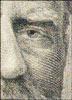
The genuine portrait appears lifelike and stands out distinctly from the background. The counterfeit portrait is usually lifeless and flat. Details merge into the background which is often too dark or mottled.

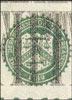
On a genuine bill, the saw-tooth points of the Federal Reserve and Treasury seals are clear, distinct, and sharp. The counterfeit seals may have uneven, blunt, or broken saw-tooth points.

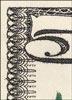
The fine lines in the border of a genuine bill are clear and unbroken. On the counterfeit, the lines in the outer margin and scrollwork may be blurred and indistinct.
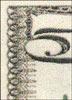
Genuine serial numbers have a distinctive style and are evenly spaced. The serial numbers are printed in the same ink color as the Treasury Seal. On a counterfeit, the serial numbers may differ in color or shade of ink from the Treasury seal. The numbers may not be uniformly spaced or aligned.


Genuine currency paper has tiny red and blue fibers embedded throughout. Often counterfeiters try to simulate these fibers by printing tiny red and blue lines on their paper. Close inspection reveals, however, that on the counterfeit note the lines are printed on the surface, not embedded in the paper. It is illegal to reproduce the distinctive paper used in the manufacturing of United States currency.


If you come across a counterfeit bill please contact the Redding Police Department.
– Press Release


