

Some people call him D.J., but his given name is Donald James Hunt. He’s 32, with a Clint-Eastwood squint and expressions on his face that change as rapidly as unpredictable weather; from a quick flash of a grin to an overcast frown.
His voice – that’s another story. It remains low and even-keeled, whether he’s talking about something that makes him a smile, such as his three little girls – 3 months, 7 years and 11 years … especially the daughter who loves turtles – or whether he’s describing an unsavory memory, like when he was about 5, and he realized that his prostitute mother was also a drug addict.
“It was easy to tell. You could see the needle hanging out of her arm,” he said from his landlady’s office, where he agreed to talk with me for this series.

Donald’s matter-of-fact narrative sped through his life chapters so we could proceed to the topic at hand: homelessness.
He told of black-and-blue beatings by his mom, who dumped him off at strangers’ houses for weeks at a time. He talked about how by 7 he was in trouble for things like assault – sometimes of other classmates, and how he later was expelled from high school when he was in about 10th grade for threatening to stab a teacher. He eventually graduated to other infractions, like robbing a Yreka liquor store.
There were some good years, such as when he had a job at an Idaho heating and air conditioning company, and regular stretches of construction work, and the time he was a prep cook at Curly’s Restaurant in Redding, and he fixed breakfast for a man that everyone – except Donald – was all excited about.
“They came running back to the kitchen saying, ‘Hey, you just cooked eggs for Merle Haggard!’ I was, ‘Merle … who’s that?’ That was the first time I’d ever heard of him.”
Those good years included a healthy adult relationship with his father – whom Donald described as his best friend, a recovered alcoholic who found sobriety late in life via religious salvation — “The kind of guy who would send me soup in the mail if I was sick.”
He also talked about his theory about why he – and so many others – end up living on the streets, and don’t reach out for help, or try to better themselves and their lives.
“It’s like, if you’re fed crap your whole life, but suddenly someone offers you a steak, nine times out of 10 you’ll choose the crap because that’s what you’re used to,” he said.
In his case, Donald’s “crap” included giving in to beer – his drink of choice – with total abandon, to the point where drinking was more important than eating, or seeing his children, or having a home, or a job, or a plan. He stayed with family and friends until he ran out of family and friends. Homelessness soon followed. After that, his self-appointed “job” was to hustle enough money – sometimes by collecting aluminum cans – to achieve his daily goal. He was proud of the fact that he never held a begging-sign or asked for money. His was the more direct approach.
“I’d walk up to people and just say, ‘I need a beer’ … just be honest about it instead of lying and saying I wanted to buy a hamburger. I think people appreciated that,” he said.
“As long as I was drunk before I had to go to bed, that’s all I cared about. Why? Well, when you fall asleep drunk outside in the bushes, you don’t feel the cold. You don’t care if it’s raining, or if there’s a stick poking you in the back or a rock under your hip. You drink and you don’t feel, and you drink and you forget. There are whole parts of that time I don’t even remember because I was drunk all the time.”
He said that alcohol and homelessness are common – but terrible – bed fellows.
“A lot of homeless think their only friend is alcohol,” he said. “They go to bed with it, but when they wake up their friend is long gone, and then they’re alone.”
Although he’s acquainted with many of the homeless interviewed for this story, such as Shannon, Donald says he was always more of a loner. He avoided the larger, more populated encampments, and preferred solitary, out-of-the-way camp sites along Sulphur Creek or under bridges – all places he slept undetected.
Even now, he can can see the best and worst parts about being homeless.
The worst part about being homeless, Donald said, is that it’s depressing and lonely. Plus you’re exposed to the weather. And some people look at you like you’re garbage – or invisible. Finally, you’re constantly hiding from the police, and trying to get something to eat or money for beer.
The best part about being homeless is that, in some ways, it’s more effortless than “regular” living, he said. And even if you do get arrested, for, say, being drunk in public, a trip to jail isn’t the end of the world, either. You get a warm bed and hot food, and you can just sleep it off for a few hours, until you’re released.
“Believe it or not, it’s easier to be homeless sometimes,” he said. “There’s no bills, no responsibilities, no worries except where to put your head that night and where to get food. All those years I was homeless, I was afraid of responsibility.”
The biggest lapse in his responsibility was as a father, because during that time, he rarely saw his daughters — all born to different mothers — scattered from Dunsmuir and Redding to Arizona.
“I was putting my kids through some of the stuff I’d gone through,” he said. “At some point I looked around my tent and thought, ‘It’s time to quit acting like a 12-year-old.’ I had to admit my mistakes. My uncle told me to pull my head out of my ass. There was help out there. I just had to bite the bullet and ask for it.”
Donald said he followed his uncle’s advice. That’s when he discovered something that changed his outlook.
“There was so much out there in the way of help that I didn’t know about,” he said.
Donald said that he found assistance from many people in many programs, starting with alcohol detox at Empire Recovery Center on California Street in Redding, funded by Siskiyou County, his former hometown. He received medical treatment and counseling from the Shasta Community Health Center’s Hope Van. He received housing education from Northern Valley Catholic Service’s Second Home program, and some food and clothes from People of Progress. He attended classes, he complied with demands and deadlines, he handed in paperwork and he showed up for appointments. He picked up part-time handyman work here and there. He qualified for food stamps.
However, the biggest success happened in August when he met a Redding property owner who took a chance and rented him a one-bedroom, one-bathroom apartment, as part of Northern Valley Catholic Service’s Second Home program. The landlord gave him some pots and pans and a bed, and along with those things she gave him a strict list of rules, such as no inviting other homeless to live with him, and keep the outside of his apartment tidy. And no pitbulls.

Meanwhile, Donald says his life remains a work in progress. For the first time in a long time, he has goals, such as meeting his obligation to attend a mandatory seven-week Deferred Entry of Judgment (DEJ) program which Donald said should basically allow him the opportunity for a major clean-slate, life do-over. And he’d like to get his GED, and maybe later, go to college and get a degree, something that nobody in his family has accomplished yet.
And he has some pie-in-the sky dreams, too, like maybe going to Alaska someday, to see polar bears, creatures that rank right up there on Donald’s cool-chart with sea turtles.
He still struggles with the intense desire to drink beer, and has even developed his own technique that sometimes holds his beer cravings at bay. He drinks massive amounts of Mountain Dew and Monster energy drink, which he describe as equiviliant to about three cups of strong coffee.
“Subconsciously, I think I’ve tricked my brain into thinking it’s beer,” he said with a laugh.
He has neighbors, and sometimes he attends the Bethel Church sponsored potlucks near his apartment, where he’ll bring his specialty, jalapeno poppers. When he sees homeless people, he allows himself to put himself in their shoes, but he refuses to walk there, or bring them home and give them shelter.
“Do I feel guilty enough about having a home that I let them live with me? No way,” he said.
“Oh, I do what I can to help everyone I can. Like this one guy, he told me he was eating cat food on crackers – that’s all he had. So I gave him some of my food – just made some ribs, and I gave him half. But I’m not going to jeopardize what I’ve got by bringing the homeless to live with me. It’s like they say, ‘If you give a stray cat a piece of bologna, they’ll keep coming back for more.’ ”
That said, Donald has a message for homeless who express an interest in having what he has – a place of their own.
“I tell them, ‘You have to get off your butt. You have to put your pride aside.’ That’s what I had to do. I’m not saying it’s always easy. Sometimes I feel like I go up one step and go down six. But the bottom line is that I keep reminding myself that I don’t want my kids to have the kind of life I had.”
Basically, for Donald, he said it boils down to two things. First, people have to help themselves. Second, he follows the rules and jumps through whatever hoops necessary to maintain the life he’s created.
He said that it’s a worthy trade-off.
“I have a kitchen where I can cook. It has an oven and I’ve got all kinds of kitchen appliances, like a crockpot and one of those grill presses and I’ve collected a bunch of different pots and pans,” he said.
“I can get a hot shower whenever I want. I can open my fridge and make something to eat any time I want. My daughters can see me here. I can invite people over and say, ‘Come on in and make yourself comfortable.’ It makes me feel proud to say I have a home.”
Click here for Part 1 of this series: Homeless Encampments: RPD Deals with Another Part of the City
Click here for Part 2 of this series: A Conversation with Randy Smith, Community Volunteer
Click here for Part 3 of this series: Homeless in Redding – Meet Shannon
Click here for the story about the community development of the Henderson Open Space.
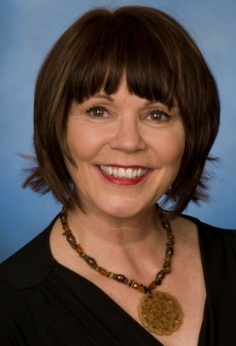 Independent online journalist Doni Chamberlain founded what’s now known as anewscafe.com in 2007 with her son, Joe Domke of the Czech Republic. Prior to 2007 Chamberlain was an award-winning newspaper opinion columnist, feature and food writer recognized by the Associated Press, the California Newspaper Publishers Association and E.W. Scripps. She lives in Redding, CA.


